Saudi reformers intensify calls for change

CS Monitor: In a move timed to the king’s return Wednesday, a group of 40 young Saudis, mostly journalists and rights activists, have signed an open “Letter to the King.”

The signers say they were inspired by Arab youth elsewhere, and by the king’s encouragement of national dialogue. They asked for elections for the advisory Shura Council, the right of women to vote and run as candidates, strong anticorruption measures, and greater fiscal transparency and accountability.

In addition, they want the Cabinet reshuffled so that ministers’ average age, now 65, is reduced to 40.

In another effort – albeit one that did not get very far – 10 moderate Islamists, including university professors and lawyers, defied the ban on political parties and announced they were forming the Islamic Umma Party.

“We think the royal family is not the only one who has the right to be leader of the country,” Abdul Aziz Mohammed Al Wohaibi, one of the party’s founders, said in an interview. “We should treat the royal family like any other group…. No special treatment.”

Asked if the group had been launched because of events in Egypt, Al Wohaibi replied that they “had created an environment for a movement like this.”

And last week, the king’s half-brother Prince Talal bin Abdul Aziz said in a BBC TV interview that unless the king made further reforms the kingdom risked future revolution. Although Talal is a maverick with little support within the royal family, his remarks are being widely discussed by Saudis.
Posted in Saudi Arabia | Comments Off on Saudi reformers intensify calls for change

Former Libyan envoy confirms Sadr’s killing

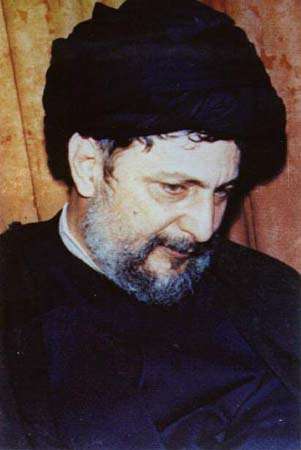
33 years after his disappearance, you can still see images of Imam Musa as-Sadr plastered on the walls of Shi’i areas of Lebanon.  He was instrumental in affecting change for Lebanon’s Shi’i community.  Long engulfed in poverty and dispossession, Imam Musa as-Sadr taught them that their misery was not permanent and empowered them through a revolutionary understanding of Shi’ism to alleviate their plight.  He continues to be the cornerstone of Shi’i activism in Lebanon today, and he is exalted by both Amal and Hizbullah, although he officially established the former.   We’ve long suspected Qaddafi of murdering the Imam. as-Sadr was sympathetic to the Palestinian cause but was very critical of the PLO’s strong-arm tactics in the south – Lebanon’s Shi’i heartland.  The belief is that Qaddafi murdered the Imam as a favor to Arafat, who was always intolerant of criticism. Qaddafi and his entire clique should be held accountable for the Imam’s death and for all those who have died not just in this uprising but throughout his 41-year tyranny.   LebanonNow reports: A former Libyan envoy has said that Lebanese Shia leader Imam Moussa al-Sadr “was shot and killed during his visit to Libya in 1978.”

In an interview with Al-Hayat newspaper to be published on Wednesday, Major Abdel Meneem al-Houni, who has resigned from his post as Libya’s Arab League envoy, confirmed Sadr’s death.

Houni, who was also Libyan leader Moammar Qaddafi’s ally during the country’s 1969 revolution, said that Sadr was buried in the Libyan region of Sebha.

The Lebanese Amal Movement – headed by Speaker Nabih Berri – has repeatedly said that Libya is responsible for Sadr’s disappearance in 1978.

Posted in 22 Khordad | 1 Comment

Egypt: Subverting Democracy Part II

I spoke at a panel at the University of Michigan last Wednesday the 16th, and I argued that the struggle for democracy in Egypt was only just beginning. I said that there are centers of power both domestic and abroad who have a vested interest in subverting democracy. So it is no surprise to hear this piece of news – al-Jazeera: Egypt’s key portfolios of defence, interior, foreign, finance and justice were unchanged in a cabinet reshuffle, state television confirmed.

The list of new ministers that was presented on Tuesday included changing the veteran oil minister, as well as introducing politicians who had been opposed to the rule of Hosni Mubarak, who stepped down from office after widespread protests.

Field Marshal Mohamed Hussein Tantawi, who leads the ruling military council and has been defence minister for about 20 years, took the new ministers’ oaths of office.

But the Muslim Brotherhood, the country’s biggest opposition group, said the new cabinet showed that Mubarak’s “cronies” still controlled the country’s politics.

“This new cabinet is an illusion,” Essam el-Erian, a senior Brotherhood member, said. “It pretends it includes real opposition but in reality this new government puts Egypt under the tutelage of the West.”

“The main defence, justice, interior and foreign ministries remain unchanged, signalling Egypt’s politics remain in the hands of Mubarak and his cronies,” el-Erian said.

Mubarak reshuffled his cabinet shortly after protests erupted on January 25 in a bid to assuage anger against his 30-year rule, but rage continued to build until his ouster on February 11.

The Brotherhood and youth protesters had demanded that all Mubarak’s ministers must be changed in the new government sworn in ahead of parliamentary and presidential elections.

The latest reshuffle brought into the cabinet a few opposition figures including Yehia el-Gamal, deputy prime minister, the Wafd party’s Mounir Abdel Nour as tourism minister, and Tagammu party’s Gowdat Abdel-Khaleq as minister of social solidarity and social justice.

Both Wafd and Tagammu had often been close to Mubarak’s government.

The Centre for Trade Unions and Workers Services (CTUWS) said the government’s appointment of Ismail Ibrahim Fahmy as new labour minister showed it continued to “co-opt formal labour unions and the labour ministry”, it said in a statement.

Fahmy was the treasurer of the General Union for Workers’ Syndicates in Egypt.

“We warn of the dire consequences of defying the will of the workers and their legitimate right to enjoy union rights,” CTUWS said.

Egyptian online democracy activists called for a demonstration on Tuesday to demand the removal of the country’s interim government, saying it contains too many old faces.

“The call for the million-man march on Friday would show people’s anger and frustration,” the Brotherhood’s el-Erian said.

Posted in Egypt | 1 Comment

In Bahrain, Protesters’ Calls for Unity Belie Divisions

NYT: Tens of thousands of protesters have taken to the streets in Bahrain in the possibly biggest demonstration since unrest began last week.

Demonstrators circled the Bahrain Mall and the financial district of Manama, the capital, in a march to the heart of the protest at Pearl Square.

“We want the fall of the government” was the most common chant among the mainly Shia Muslim protesters who accuse the Sunni rulers of discriminating against the island’s Shia majority.

Posted in 22 Khordad | Tagged | Comments Off on In Bahrain, Protesters’ Calls for Unity Belie Divisions

The mother of Bouazizi speaks in solidarity with the Libyan people

The mother of Muhammad Bouazizi speaks in solidarity with the Libyan people here.

Posted in Libya, Tunisia | Tagged | Comments Off on The mother of Bouazizi speaks in solidarity with the Libyan people

What Egypt & Tunisia Tell us About Iran

My article on Juan Cole’s Informed Comment: There has been much debate about whether the recent revolutions in Tunisia and Egypt, especially in the latter, will produce a system resembling that of the Islamic Republic in Iran, which was born of revolution in 1979. However, in focusing on what is indeed an important question, two crucial points have gone unnoticed: The speed with which these two revolutions have occurred tells us something about their Persian counterpart’s endurance as it relates to its own grassroots protest movement, and at the same time the revolutions challenge the Islamic Republic’s narrative on the discourse of revolution in the Middle East.

Remarkably, the Egyptian regime—for all its international and regional support, decades of institution-building and massive security apparatus—collapsed after facing only 18 days of an albeit concerted and relentless protest movement that would not settle for any compromise short of Mubarak’s ousting.

The Egyptian government’s inability to survive the protest movement contrasts with the Iranian government’s continued grip on power. After the June 12, 2009 presidential election, large segments of Iranian society morphed Mousavi’s election campaign into a popular protest movement that grew rapidly and reached nearly three million people in Tehran alone three days after the announcement of the results. The speed with which the protests mushroomed prompted Supreme Leader Ali Khamenei to order a crackdown a week later. Through the use of mass coercion and the deployment of its own supporters, a sizeable number in themselves, the regime systematically regained control of the streets after months of intermitent protests. The efficacy with which the regime enforced its will on the protesters and its ability to call upon hundreds of thousands of its own supporters signify its ability to endure in the face of a protracted and explosive challenge to its authority.

That the relatively isolated Iranian government was able to weather such a prolonged storm, lasting eight months in all, while the powerful Egyptian regime, which enjoyed regional and international support, notably from the US, fell after only 18 days attests to the Iranian government’s endurance. This is an important point deserving consideration when calculating how to promote non-violent democratic change in Iran.

That is to say, marches and demonstrations alone will not be sufficient to enact peaceful regime change in Iran. As Iran’s opposition tries to rekindle its own protest movement by tapping into the momentum of the Egyptian and Tunisian revolutions, the opposition’s strategy should not be limited to street activity, as it was in the past, but expanded into a more comprehensive approach including strikes, encampments in Iran’s own Liberation Square and, most importantly, garnering the support of Iran’s armed forces—all of which were tactics vital to success in Egypt.

Besides underscoring the Islamic Repubic’s ability to endure and highlighting the necessity for a broader strategy for non-violent action in Iran, the Tunisian and Egyptian revolutions also provide an ideological challenge to the Iranian regime’s discourse on revolution. Specifically, these recent revolutions cast doubt on the regime’s narrative that Islamic Revolution is the only means by which to topple foreign-sponsored and deeply entrenched dictators in the region. Until now, the Iranian Revolution of 1979 has been the only populist-led revolution in the Middle East. The Egyptian Revolution of 1952 and the Iraqi Revolution of 1958 were not revolutions in the traditional sense, but military coups against hated monarchs that were immediately supported by the masses. As the sole country to orchestrate a popular revolution, the Iranian government has argued that revolution is possible in the Middle East only through the framework of Islamic Revivalism, positing its own history as a testament to this contention. Arguing that it was solely the people’s belief in Islam as an ideology that empowered the revolutionary movement to overcome the Shah’s western-backed regime, such a narrative of the Iranian Revolution marginalizes other forces and factors that contributed to the revolution’s emergence and success.

Although it remains uncertain which direction they will eventually take, simply by virtue of having emerged within a secular and nationalist framework, the Tunisian and Egyptian revolutions’ current states of triumph provide an alternative to the Iranian government’s theory of revolution. By doing so, they have inadvertently detracted from the allure of Islamic Revolution, which the Iranian government has long championed. In other words, the Islamic Revolution can no longer claim the mantle of being the only path to popular revolution. This challenge to the Iranian government’s discourse on revolution explains why authorities in Iran, however unconvincingly, are attempting to depict the recent revolutions in Egypt and Tunisia as part of a wider Islamic Awakening.

Thus, in addition to the belabored discussions about the improbability of these revolutions charting a path similar to that of Iran’s in 1979, the two points related to the durability of the Iranian regime and the challenge posed to its narrative of revolution warrant attention because of the crucial insight they offer Iran observers. The speed with which the dictatorships in Egypt and Tunisia fell stands in stark contrast to the Iranian government’s survival after the 2009 post-election turmoil – a critical point that needs to be considered when strategizing how to promote non-violent democratic change in Iran. Concurrently, these recent revolutions bring to the fore an alternative that challenges the Iranian government’s narrative on revolution, revealing that a revolution does not necessarily have to be an Islamist one in order to claim victory over a seemingly invincible authoritarian regime.

Posted in Egypt, Iran, Tunisia | 13 Comments

Dictators Stand Together: Saudi Arabia says it’s ready to help Bahrain’s rulers

If Saudi Arabia pledges to come to Bahrain and prevent the downfall of the dictatorship there, I say let the protests spread to all corners of Saudi Arabia so as to bog down the regime there while Bahrainis overthrow their tyranny!  Washington Post: Saudi Arabia on Sunday said it stands ready “with all its capabilities” to shore up Bahrain’s ruling royal family if a standoff with the Shiite-led opposition is not resolved soon, underscoring the kingdom’s deep concern about its neighbor’s ongoing political crisis.

Sunni-led Saudi Arabia props up Bahrain’s al-Khalifa family with cash and has long sought to prevent the tiny Persian Gulf state – with its majority Shiite population – from falling into Iran’s orbit. With dwindling oil resources, Bahrain relies heavily on Saudi Arabia for money and security.

It was unclear whether the Saudi comments indicated that the country was contemplating possible action in Bahrain or were merely meant to express growing anxiety among Saudi leaders. But some regional experts have long warned that a concerted Shiite challenge to the monarchy in Bahrain might prompt intervention from Saudi Arabia, which has its own restive Shiite minority population. The two countries are connected by a causeway.

Posted in Bahrain, Saudi Arabia | Comments Off on Dictators Stand Together: Saudi Arabia says it’s ready to help Bahrain’s rulers

Egypt is no longer committed to an alliance with Israel against Iran

Ha’aretz: A year and a half ago, an Israel Navy submarine crossed the Suez Canal on its way from Haifa to the Red Sea, where it conducted an exercise, and back. The unusual voyage reflected the growing strategic cooperation between Israel and Egypt, which aimed a menacing message at Iran. The submarine’s crossing of the waterway demonstrated how quickly Israel could deploy its deterrent near Iran’s shores, with the tacit support of Egypt.

Once more, the canal is being used to deliver a message of deterrence – but this time the direction is reversed. Egypt is allowing Iranian warships to cross the canal, on their way to Syrian ports. Israel was publicly critical of the passage – arguing that it is a provocative move – but Egypt ignored the pressures and granted the Iranian navy permission to pass, symbolizing the change to the regional balance of power following the fall of President Hosni Mubarak.

Egypt is signaling that it is no longer committed to its strategic alliance with Israel against Iran, and that Cairo is now willing to do business with Tehran. This is precisely what Turkey has done in recent years under Prime Minister Recep Tayyip Erdogan.

Since the uprising against Mubarak, the cold peace between Egypt and Israel has cooled even further. The delivery of natural gas to Israel, which was cut off after a terrorist attack on a station in northern Sinai, has still not been resumed.

Sheikh Yusuf al-Qaradawi returned to Cairo after decades in exile and addressed a million strong crowd in Tahrir Square on Friday, calling for the liberation of the Al-Aqsa Mosque and the upcoming victory against Israel. In the past, the sheikh had expressed support for suicide attacks against Israelis and two years ago described the Holocaust as “God’s punishment of the Jews.”

The appearance of the Islamist firebrand in the square has returned hatred for Israel to the center of the public debate over Egypt’s future. Until now, the argument was that the revolution concerned domestic matters, not Egypt’s relations with the United States or Israel. The Muslim Brotherhood has also been trying to send messages of moderation to the West, but this is hardly comforting.

There is growing concern in Israel that Egypt will become a hostile front, adding to the feeling of international isolation which has only intensified since Benjamin Netanyahu became prime minister. The recent vote at the UN Security Council over the Palestinian resolution to label the settlements as illegal only increased this sense of isolation. With 14 states supporting this measure, Israel needed an American veto to foil it.

The Palestinians may have lost that vote, but the issue demonstrated which side in the conflict enjoys widespread international recognition.

Bolstered with Congressional support, Netanyahu forced U.S. President Barack Obama into the veto – which he had avoided using to date. The Americans argued that internationalization of the conflict cannot replace direct negotiations, and that forced decisions will only result in parties taking up more extreme positions.

It is not yet clear what Obama will try to get from Netanyahu in return: a plan for the establishment of a Palestinian state in the territories, or acceptance of an American peace plan. The U.S. president will argue that Washington needs to bolster its credibility in the Arab world and that Israel must contribute its lot to ensure that the new regimes in the area are friendly.

Now that Labor has been kicked out of the coalition, the government is breaking to the right. In the coming weeks, Netanyahu will have to maneuver between the threats issued by Foreign Minister Avigdor Lieberman and international pressure. Having lost his friend Mubarak, this will be even more difficult than in the past.

Posted in Egypt | Comments Off on Egypt is no longer committed to an alliance with Israel against Iran

Karroubi’s boldness

I have a lot of respect for Mehdi Karroubi. Don’t hold it against me, I don’t know his entire life story so this isn’t me endorsing everything he may have done, good or bad, but the way in which he stands up to the Iranian regime is courageous, to say the least. I feel that although Mousavi was the opposition’s favorite in ’09, Karroubi has shown much more guts in his criticism of the regime. Read his latest demand: “Mehdi Karroubi, the Iranian opposition leader, has asked to be put on trial in public, his website reported. Sahamnews.org said on Sunday that Karroubi made the call in a letter to Ayatollah Sadegh Larijani, Iran’s judiciary chief, that was posted on the website as he was under  ‘complete house arrest’ and unable to deliver it. ‘I have a request to you that as soon as possible and through legal channels … a public court be set up so the indictment and defence are heard,’ Karroubi said in the letter, according to Sahamnews.org. ‘It should be a fair and public court so the people get to know the truth,’ he said, stressing that his ‘firmness in defending the legitimate right of the people was unshakable’. The letter was posted on a day of nationwide anti-government rallies called for by a group supporting Karroubi and fellow opposition leader Mir Hossein Mousavi. The call from the Council for Coordination of the Green Movement Hope was posted on Sahamnews.org and Mousavi’s website, Kaleme.com, on Thursday, prompting a warning from authorities for protesters to stay off the streets.

Posted in Iran | 1 Comment

The crackdown in Libya will only harden the opposition’s demands

Dictators abound in the region but Qaddafi is really something else. He’s not even subtle about cracking down. At least the Iranian and Egyptian governments, however unconvincingly, offered some denials or tried to blame other parties. The pro-regime  Al-Zahf al-Akhdar newspaper “warned that the government would ‘violently and thunderously respond’ to the protests, and said those opposing the regime risked ‘suicide’.”  Simply put, if you come out, they will kill you and it’ll be your own fault because you were forewarned.  Libyan forces have been accused of even shooting at funeral processions! More than 200 have died in just a week’s time.  The number is probably much much higher.  But you have to respect the Libyan activists because they’re continuing and they’re continuing strong.  See the footage from Saturday’s protest here.  Qaddafi’s decision to spill so much blood effectively means that there can no longer be any sort of compromise with the government. While the Bahraini authorities are inviting the opposition to a national dialogue, a  gesture seen as futile by large swaths of the opposition, the Libyan mass murder will only harden the opposition against the state.  The response to such bloodshed effectively means that there can be no reform, no compromise short of the regime’s total destruction.

Posted in Libya | Comments Off on The crackdown in Libya will only harden the opposition’s demands

Human Rights Watch: 84 Dead in Libya in 3 Days

That’s more than what the opposition Green Movement claims to have died in the entire 6 months after the 2009 elections in Iran (though much more have been executed after the protests were stamped out) – Huffington Post: Disturbing new details are coming out of the Libya protests. Government security forces have killed at least 84 people in three days, Human Rights Watch said in a news release Friday night.

Even though people were protesting peacefully, according to HRW, security forces killed 20 people in Benghazi, 23 in Baida, three in Ajdabiya, and three in Derna in a matter of days. In addition, 35 people were killed in Benghazi on Friday, nearly all with live ammunition.

HRW said that telephone interviews with hospital staffers and witnesses led to the estimates. It added in a statement: “The Libyan authorities should immediately end attacks on peaceful protesters and protect them from assault by pro-government armed groups.”

The regime of Muammar Gaddafi is said to be behind the massacres, according to The Guardian, which reported that it also imposed a news blackout, similar to Iran’s crackdown on journalists in 2009.

The last few days have represented an unprecedented challenge to the 41-year rule of Gaddafi, the New York Times reported, in part inspired by the Egypt revolution.

Libya is a relatively small nation in North Africa of approximately 6 million people. You can learn more about it here. Follow the latest developments from the Middle East live below.

Posted in Libya | Tagged | Comments Off on Human Rights Watch: 84 Dead in Libya in 3 Days

Footage of the Massacre in Yesterday’s Bahrain

See it here but brace yourself, it’s brutal and gruesome.

Posted in Bahrain | Tagged | 1 Comment

Slogans from Victory March in Egypt Focus on Palestine

“To Jerusalem we are heading, Martyrs in the millions.” See the clip of the massive rally here. Is there still doubt about the vitality of pan-Arabism? Chants in Tunisia have been replicated elsewhere, protests in Egypt have focused on Palestine, Al-Jazeera is the new Nasser, what more proof do you need?!

Posted in Egypt, Palestine | 2 Comments

US Wavers on Middle East Crisis

See the video here.

Posted in 22 Khordad | 2 Comments

Footage of Demonstrations in Libya

See the video here.

Posted in 22 Khordad | Comments Off on Footage of Demonstrations in Libya