Nicaragua suspends diplomatic ties with Israel

The fall out continues: “The Nicaraguan government Tuesday suspended the country’s diplomatic ties with Israel in protest of the Jewish state’s deadly raid on the Gaza-bound international aid flotilla on Monday... The Nicaraguan government ’emphasized the illegal nature of the attack on a humanitarian mission in clear violation of international and humanitarian law,’ it added.”

AND

Ha’aretz: “The Swedish Soccer Association has asked UEFA that its national youth soccer team not be sent to Israel for an official match scheduled for Friday against Israel in the preliminaries of the European championship. The request comes in the wake of the Israeli Navy’s interception of a Gaza-bound aid flotilla that turned deadly. ‘As humans, we are revolted by violence and shocked by what we saw,’ said Lars-Ake Lagrell, the head of the Swedish Soccer Association.”

Posted in Flotilla Massacre, Gaza | Comments Off on Nicaragua suspends diplomatic ties with Israel

Of course, they were asking for it

Razor Sharp: It’s time the Israeli government’s PR team made the most of its talents, and became available for hire. Then whenever a nutcase marched into a shopping mall in somewhere like Wisconsin and gunned down a selection of passers-by, they could be on hand to tell the world’s press “The gunman regrets the loss of life but did all he could to avoid violence.” Then various governments would issue statements saying “All we know is a man went berserk with an AK 47, and next to him there’s a pile of corpses, so until we know the facts we can’t pass judgement on what took place.”

To strengthen their case the Israelis have released a photo of the weapons they found on board, (which amount to some knives and tools and wooden sticks) that the naive might think you’d expect to find on any ship, but the more astute will recognise as exactly what you’d carry if you were planning to defeat the Israeli army. It’s an armoury smaller than you’d find in the average toolshed in a garden in Cirencester, which goes to show the Israelis had better destroy Cirencester quickly as an essential act of self-defence.

Posted in Flotilla Massacre, Gaza | Tagged | 4 Comments

‘Our ship turned into lake of blood’

I got my blog up and running again just in time to comment on Israel’s most recent savagery… But before I do, I want to remind the blog’s viewers that this blog though experiencing some technical difficulties at the moment, will always be back up and running, no matter what. I am, however, in the process of securing the blog and updating its design. If you could help in this regard, please email me at pouya@umich.edu.

Now to the Israeli wrought massacre… I’ve been monitoring the flotila since it first set sail and knew that Israel sought to make an example out of it in order to dissuade similar future endeavors but I didn’t expect this… no one did.  But I absolutely cannot stand Israeli state terror apologists justifying the attack as self-defense. As my law professor put it,”It is not ‘self-defense’ when a state sends commandos to board a civilian ship in international waters, especially when the action is part of an effort to maintain an illegal siege on the people of a territory that the state claims not to be occupying. It is also not self defense when the commandos attacking the ship …shoot at protesters who attempt to stop them from doing so!”

And if you’d like to read about first-hand accounts from what happened on the ship, read the article post below which quotes from the actual aid activists, one of which is a 72-year-old German man!
I hope Israelis can stop playing victim and take a hard look in the mirror. An author writing in the Israeli Ha’artz seems to be heading in that direction: “We explain, time and again, that we are not at war with the people of Gaza. We say it time and again because we ourselves need to believe it, and because, deep down, we do not.”

We shall see how they come to treat the last ship in the flotila that was not raided since it was slower and behind in the journey. It’s due to arrive soon.
The Guardian: Some formed human shields, others fought back with makeshift weapons, while a few of the most vulnerable hid below deck and prayed for the violence and killing to stop.

But what united every survivor who spoke out today about yesterday’s pre-dawn assault by Israeli commandos on the pro-Palestinian aid flotilla to Gaza, was a sense of deep shock at the speed, aggression and lethal force of the Israeli response to what they reiterated was nothing more than a humanitarian aid effort.

Speaking on arrival back in Berlin, wrapped in an airline blanket from the Israeli national airline El Al, Norman Paech, a 72-year-old German pro-Palestinian activist described waking up to hear “striking explosions” as the assault began on the Mavi Marmara, the flotilla’s informal flagship.

“I hurried up and dressed myself and colleagues said to me ‘we’re under attack, the Israelis are here’,” he said. “The aggression came from the sky, from helicopters from which soldiers came down by ropes. We waited in the fore room and saw them carrying an Israeli soldier who looked to me like he’d had a breakdown. Then the second and third came, but after these three injured soldiers then I saw a lot – maybe 10 – passengers who were severely hurt, injured, covered in blood. They were treated in the salon next to me. One was so badly injured I am sure he must have died soon after. I didn’t even consider going upstairs as it was just too dangerous.”

Continue reading

Posted in Flotilla Massacre, Gaza | Tagged | 4 Comments

Karroubi’s Latest Interview

“Mr Karroubi, a year has passed since the eventful month of Khordad 1388 (22 May-21 June 2009). Yet this month is considered to be a historic one in Iran: the epic election victory of Mohammad Khatami on 2 Khordad 1376 (23 May 1997), the brave resistance that led to the liberation of the southern city of Khorramshahr on 24 May 1982, the 15 Khordad Movement (5 June 1963), and the much disputed and controversial election of 12 June which led to the formation of the people’s Green Movement. Is it possible to find an explicable link between these events?” Read his response and the rest of the interview here.

Posted in 22 Khordad | Tagged , | Comments Off on Karroubi’s Latest Interview

The World Economic Crisis and an Insulated Iran?

al Jazeera – Excerpt: However, Iran’s nuclear technology has advanced faster than expected and a 2007 report by the US government accountability office (GAO) found that “since 2003, the Iranian government has signed contracts reported at about $20bn with foreign firms to develop its energy resources. Further, sanctioned Iranian banks may fund their activities in currencies other than the dollar”.

What the GAO report could not foresee – because it had forgotten about its domestic accountability issues – was that the 2007 US sanctions against Iranian banks ironically ensured Iran’s immunity from the global financial crisis that was about to explode.

Iran was among the few major economies in the world not to be severely affected by the crisis.

Smaller banks from emerging economies, Islamic banking and less formal means of cross-border payments, including cash and ‘hawala’, provided the best protection for those who were kept out of the ailing Western banking system as a form of ‘punishment’.

The same report also shows that Iran’s exports grew from $8.5bn in 1987 to $70bn in 2006, representing an 824 per cent increase.

Iran’s exports have continued to grow since. According to the Economist Intelligence Unit (EIU), they are expected to reach $82bn this year.

Iran’s largest export market is Iraq, followed by China.

As irony would have it, Iran’s trade with both countries has grown exponentially since the US invasion of Iraq in 2003.

Moreover, and despite the sanctions, the net flow of foreign direct investment (FDI) into Iran has grown steadily too, save for the 2008-2009 blip. The EIU estimates that Iran’s net FDI will rise by 100 per cent within the next four years.

This is partly due to Iran’s successful and increasing reliance on ‘South-South’ trade, which effectively translates into her own sanctions against the West.

Continue reading

Posted in Iran | Tagged | Comments Off on The World Economic Crisis and an Insulated Iran?

Chomsky denied entry into Gaza by Israel

The so-called “only democracy in the Middle East,” did not allow Professor Chomsky to enter the besieged Gaza Strip because accordingly, “Israel does not like what you [Chomsky] say”. See the al Jazeera video here. Read about it here.

Posted in Academics, Gaza | Tagged | Comments Off on Chomsky denied entry into Gaza by Israel

Hezbollah entrenched in Lebanon years after Israel left

BBC – Excerpts: “Ten years on since the withdrawal, the UN together with the Lebanese army patrol the border area. But flapping in the breeze along the fence are yellow and green flags of Hezbollah. Waving next to them is the flag of the group’s biggest foreign backer – Iran. It is Hezbollah that has real control over what happens in southern Lebanon and many villagers say they like the arrangement. ‘It’s the resistance, its weapons and [Hezbollah leader] Hassan Nasrallah who make us feel safe here,’ says Fawwaz Mohammed. ‘Without the resistance we could never be free.’ …While Hezbollah remains extremely secretive about its military, the museum is in many ways, a sign of just how much the group has evolved over the last 10 years. Today, it is arguably the most powerful militia in the Middle East and inside Lebanon it also functions as a sophisticated political organisation which has won elections, which has a track record of doing serious social work, and which is clever at marketing itself. …In fact many in Lebanon believe that the group does have some sort of long-range missile, if only because in some of his recent speeches the group’s leader, Hassan Nasrallah, has threatened to hit targets deep inside Israel. ‘I don’t know what kind of rockets Hezbollah has, but what I do know is that Hassan Nasrallah does not make empty threats. Israel knows that, which is why they are worried,’ says Beirut-based analyst Rami Khoury.”

Posted in Hezbollah, Islamism, Lebanon | Tagged , | 1 Comment

Brazil slams US approach towards Iran

See the al Jazeera video here.

Posted in Iran's Nuclear Program | Tagged | Comments Off on Brazil slams US approach towards Iran

Rima Fakih, Muslim women, and how Americans see them only through the prism of what they wear…

Newsweek – Excerpt: “Burqas in European headlines, bikinis in American ones: which one tells you more about the aspirations of Muslim women? One appears to be primitive and repressed, the other modern, cosmopolitan, and liberated. But the answer is not really so obvious at all. The real test of modernity, including our own, is tolerance. And to the extent that we see Muslim women mainly in terms of dress codes, we’re only revealing how much we in the West have let stereotypes take over our view of the vast and complicated culture in which they actually live.”

Posted in Islam, Muslims in America | Tagged | Comments Off on Rima Fakih, Muslim women, and how Americans see them only through the prism of what they wear…

Hardliners Close in on Mousavi

Tehran Bureau – Excerpt: “Ahmad Yazdanfar, senior aide and advisor to Mir Hossein Mousavi and head of the team of bodyguards that protects him, has been arrested by the Islamic Republic’s security forces. A former officer in the Islamic Revolutionary Guard Corps, Yazdanfar has been Mousavi’s bodyguard since 1983, and protected him at the height of the assassination campaign carried out by the Mojahedin-Khalgh Organization in the 1980s, when Mousavi was prime minister. He has been injured many times protecting Mousavi. The arrest, apparently made at midnight on Saturday, May 15, was announced by Mousavi’s website, Kalameh, on Tuesday. Mousavi has asked the entire staff of his office not to report to work. He has stated that Yazdanfar’s arrest is part of a larger plan aimed either at his own arrest ahead of the June 12 anniversary of last year’s rigged election, or at least his house arrest in order to prevent him from organizing peaceful demonstrations on the anniversary date.”

Posted in 22 Khordad | Tagged | 1 Comment

Finkelstein on using the Holocaust for political ends

In this video, we have Professor Finkelstein refusing to allow the memory of the Holocaust stifle legitimate criticism of Israeli policies vis-a-vis the indigenous Palestinian people.

Posted in Academics, The Conflict | Comments Off on Finkelstein on using the Holocaust for political ends

Gary Sick on the Latest Nuclear Agreement

Gary Sick: What to make of the new nuclear agreement by Turkey and Brazil with Iran?

Perhaps the main point is to be reminded of the moral from the old folk tale: Be careful of what you wish for, since you just might get it. The United States took a rather righteous position that the International Atomic Energy Agency (IAEA) and the West had made Iran a remarkably generous offer, and when it was rejected they had no choice but to go all out for sanctions.

There are those in Washington (but also in Paris and London) who were fully committed to passing a strong sanctions resolution in the United Nations Security Council next month, and this is a blow to them and all the intense diplomatic work they have done in the past five or six months. Clearly, it will be immensely more difficult, if not impossible, to get a sanctions resolution if this deal is on the table.

According to preliminary information, the agreement provides that Iran will, within a month, ship 1240 kg of roughly 5 percent low enriched uranium (LEU) to Turkey where it will be held in escrow for up to a year until Iran is provided with 120 kg of fuel cells (uranium enriched to near 20 percent) to replace the nearly exhausted fuel of the Tehran Research Reactor (TRR) that makes medical isotopes. This represents more than half of the 2065 kg of LEU that Iran had produced as of February according to the IAEA, and it greatly reduces Iran’s capability to produce enough fissile material for a bomb.

We should all be reminded of the original purpose of the agreement. It was intended as a confidence-building measure that would open the way to more substantive discussions of other issues. The original offer that Iran provisionally accepted in October tacitly accepted Iran’s right to enrich uranium; in return Iran would give up control over a significant portion of its existing stash of LEU. Even low enriched uranium can be further enriched to create bomb-grade (roughly 90+ percent) highly enriched uranium (HEU) that is required for a bomb. The October agreement would have created an environment conducive to at least minimal mutual trust and the beginning of serious negotiations.

Note to negotiators: In the past six months, Iran has not used its LEU to build a bomb, even without an agreement.

Iran has set up a special line of centrifuges to enrich uranium to the 20 percent required for the TRR. But that line is small, separated from its other enrichment facilities, and under inspection of the IAEA. The move to enrich some uranium to 20 percent was obviously intended as a pressure tactic to drive the West back into negotiations, since Iran does not have the capability to manufacture fuel cells for the TRR.

We should also be reminded that Iran did not reject the original deal: they proposed amending it. Basically, when the Iranian negotiators came home with the proposed deal, they were attacked from all sides – including members of the Green Movement – for being suckers. Their opponents pointed out that they were going to rely on the word and good will of Russia (where the LEU would be enriched to 20 percent) and France (where the fuel cells would be fabricated). Iranians from left to right argued that both of these countries had repeatedly cheated Iran on nuclear issues: Russia by delaying endlessly the completion of the nuclear power plant at Bushehr, and France by refusing to grant Iran rights to the Eurodif enrichment facility partially owned by Iran since the days of the shah. Why, they asked, should we believe that this agreement will be any different?

Instead, they proposed that the swap of LEU for the fuel cells should happen on Iranian soil, probably in stages and within a fixed period of time. That idea was rejected by the United States and its negotiating partners.

The new bargain appears to be a compromise in which the LEU would physically be removed from Iran and held in escrow in Turkey for up to a year, in which time the fuel cells would be manufactured and delivered to Iran. The new bargain also appears to go much further in formally recognizing the legitimacy of Iran’s independent enrichment program. That should not be a surprise given the fact that Brazil, one of the parties to the bargain, has its own enrichment facility similar to Iran’s and in fact concealed its details for some time.

So where does that leave us?

Essentially, it takes us back to last October. The one big difference is that Iran has more LEU now than it did then. But the reality is that Iran will keep producing LEU unless a new agreement is reached to persuade them to stop. If we had completed the agreement of a swap in October, Iran would have the same amount of LEU as it has now. If we wait another six months for negotiations, Iran will have still more LEU.

In short, this agreement is largely symbolic and limited in its practical effects. If the West accepts the deal as worked out by Brazil and Turkey, and if a new round of negotiations begins – on both the nuclear and other major issues – then this could be a breakthrough. If the West turns it down, or if the two sides do not use it to negotiate some of the major issues that separate them, then nothing much will have been accomplished.

The next step is up to the United States and its negotiating partners.

Although angst is high among the sanctions-at-all-costs crowd, this path to a nuclear swap deal was fully endorsed by the United States and was the centerpiece of the justification for sanctions. One way to respond at this point may just be to declare that our threat of sanctions worked: Iran has capitulated and we accept yes as an answer.

Hmmm…are we that smart?

Posted in Iran's Nuclear Program | Tagged | Comments Off on Gary Sick on the Latest Nuclear Agreement

Shapour Bakhtiar’s Assassin to be Freed

AFP: “France decided Monday to send home an Iranian agent it had jailed for murdering the Shah’s last prime minister, two days after Tehran freed a young French academic accused of spying. Ali Vakili Rad was serving a life sentence for stabbing Shapour Bakhtiar to death at his home outside Paris in August 1991, but he had recently asked for parole and Iranian leaders had linked his case to that of Clotilde Reiss. A court is due to rule on the parole request on Tuesday, but Interior Minister Brice Hortefeux signed a deportation order on Monday, paving the way for his release and return back home.”

Posted in Iran | Comments Off on Shapour Bakhtiar’s Assassin to be Freed

Brazilian President on Iran’s Nuclear Program

I don’t know much about Brazilian president Luiz Inacio Da Silva, but I like what he has to say regarding Iran. He seems both reasonable and fair. See the al Jazeera interview here.
Posted in Iran | Comments Off on Brazilian President on Iran’s Nuclear Program

The Green Movement’s Slogans

There are some slogans with which I can identify and there are others that I think are either politically immature or underdeveloped, but one slogan from the recent protests at Shahid Beheshti University really fascinated me.

The protesters declared:

ما اهل کوفه نیستیم ، نیمه راه بایستیم

The translation reads something like this: We are not from Kufa, we will not go halfway (rhymes in Persian).

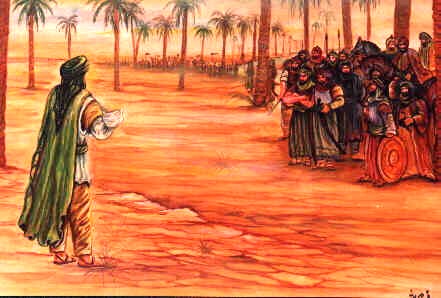
It’s a powerful slogan given the history behind its meaning. Kufa is located in modern-day Iraq and in 680AD the Kufans invited Hussain, the Prophet’s grandson who the Shi’i believe was the rightful successor, or Caliph, to Muhammad, to Kufa where they were supposed to pledge allegiance (بیعت) to him but en route, he was surrounded at Karbala where him and his followers chose martyrdom over submission and were massacred. The Kufans did not come to his aid in his our of need and were guilt-ridden when news of his murder reached them.

That the protesters at Shahid Beheshti University are referencing such a pivotal historical event and turning it on its head to declare that they are committed to their objectives, whatever they may be, until the end, suggests political wit and an acute sense of history.

While some slogans have captured my attention and others have failed to do so, this one in particular commands respect.

Posted in 22 Khordad, Iran | Tagged | 2 Comments