Trailer: “April Showers”

This film is based on the Columbine Massacre (1999).  It was written and directed by one of the massacre’s survivors. I know it’s going to be a traumatic film to watch, but I’m going to see it anyway. It comes out on the 24th of this month. I was 17 and in high school when the Columbine Massacre happened and I was deeply disturbed by the event. They were talking about the film today on CNN and the broadcaster said that since then, over 80 school shootings have occurred, of which the Virginia Tech shooting was the worst. See the trailer here.

Posted in Trailers | 2 Comments

Lebanese Armenians to Vote for Hizbullah

BBC: In the upcoming parliamentary election in June, the main Armenian political party, Tashnak, looks set to play kingmaker. The vote of the 150,000-strong Armenian community may sway the outcome of the bitter and close race between the pro-Western government and the opposition led by Hezbollah, a Shia group backed by Syria and Iran. In the run-up to the election, politicians from both blocs have been fighting for the Armenian votes. But of the three Armenian parties, Tashnak enjoys most support and it has already made its choice, joining the Hezbollah-led alliance.

 
Posted in Hezbollah, Islamism, Lebanon | 1 Comment

Iran at Forefront of Stem Cell Research

Washington Times: (By Su’ad Jafarzadeh) Though the world’s attention has focused on Iran’s advancing nuclear program, Iranian scientists have moved to the forefront in embryonic stem cell research, according to a recent joint study by Harvard University and the Massachusetts Institute of Technology.

Controversial in the United States, embryonic stem cell research was embraced in 2002 by Ayatollah Ali Khamenei, Iran’s conservative religious leader. President Obama has recently adopted a similar policy, reversing restrictions that George W. Bush’s administration imposed because of the implications for destroying potential human lives.

Stem cells have been shown to have significant capability to develop into a plethora of different cell types and work as a repair system to replenish cells with specialized functions.

“Islam is very compatible with the modern sciences,” said Hassan Ashktorab of the Howard University Cancer Center. “Policies that may be classified as liberal in the American political system seem to be common sense to Iranian politicians.”

Ayatollah Khamenei has often spoken of launching Iran to the scientific vanguard of the Muslim world, and scientific achievement is important to Iranian national pride. During the Persian Empire – a designation for Iran used until the early 20th century – Iran was a crossroads of medical advancements and established itself as a center of world learning.

The 1979 Islamic revolution triggered a massive brain drain, slowing Iranian advances in science, Mr. Ashktorab said. “There are many renowned scientific intellectuals around the world who are originally Iranian, yet they have adopted a new nationality in the country to which they have migrated,” he said.

But Ali Khademhosseini, an Iranian immigrant to the U.S. who co-wrote the recent study on stem cells for the Harvard-MIT Division of Health Sciences and Technology, said brain drain is “a more generic issue in Iran” and has not prevented Iranian scientists from making advances in certain areas, such as stem cell research.

“The sciences in Iran have a lot of committed and passionate people, so the brain drain doesn’t necessarily affect this field,” he said.

In 1988, after the end of the eight-year Iran-Iraq war, Iran began to heavily invest in the sciences. According to the study by Mr. Khademhosseini and David Morrison, government spending on science rose from 0.2 percent of Iranian gross domestic product in 1990, or about $232 million, to 0.65 percent in 2005, the equivalent of $1.2 billion.

In 2008, Press TV, Iran’s state-sponsored English language international news channel, reported that the Iranian government planned to invest $2.5 billion in stem cell research alone over a period of five years.

Iran’s stem cell research is centered at the Royan Institute, in the foothills of the Alborz mountains in northern Tehran.

Founded in 1991 as an infertility clinic, it was expanded in 1998 into a Ministry of Health-approved cell research center. According to the Royan Institute Web site, it hosts departments in six fields: stem cells, embryology, gynecology, genetics, andrology and epidemiology.

Iran is in the top 10 of countries in the world that produce, culture and freeze human embryonic stem cells, according to Mr. Khademhosseini’s study.

This places Iran in the company of countries including Sweden, Japan, the United States, Australia, Britain, India, South Korea and Singapore.

Royana, the name given to the first cloned sheep in the Middle East, was born Sept. 30, 2006, in the Iranian city of Esfahan. Iranian scientists have also identified and isolated human kidney stem cells and cultured and produced differentiated liver tissues in mice.

Despite Iran’s conservative Islamic rule, there is broad government approval for embryonic stem cell research, which Muslim clerics say is permissible under Islamic law. Shi’ite Muslim scholars believe that the fetus is given a soul at 120 days, before which abortion is permissible when there is a physical or emotional threat to the mother – thus avoiding the abortion debates common in the United States.

Ayatollah Khamenei often cites the Koran’s emphasis on preventing human illness and suffering as evidence that stem cell research and Islam are compatible. Limits do exist: Iran’s supreme leader has warned Iranian scientists to be careful that producing identical parts of human beings does not lead to producing a human being, as human cloning is not accepted – a policy shared by the Obama administration.

Although Iran’s progress has been noteworthy, political unrest between Iran and the West has been an impediment. Sanctions directed against Iran’s nuclear and missile programs have lessened the availability of other scientific supplies and equipment primarily manufactured in the U.S. Many Iranian scientists depend on the black market to acquire the equipment necessary for common scientific practices, though at a higher cost.

Mr. Khademhosseini said that despite these problems, he is optimistic about the future. Iranian “research is improving; there is support from the general public, as well as the government. It definitely looks bright.”

Posted in Health, Iran, Technology | 5 Comments

Guantanamo Captive Phones TV Office, Claims Abuse

Reuters: A young Guantanamo prisoner from Chad was given permission to telephone a relative but instead called the al Jazeera television network and said he was being beaten and abused at the U.S. detention camp. Transcripts of the recorded interview with Guantanamo captive Mohammad el Gharani were posted on the Qatar-based television network’s English-language website on Tuesday. It was the first known interview with a captive held behind the razor-wire encampments at Guantanamo, which journalists are allowed to visit only if they sign an agreement not speak to any prisoners. It was not immediately clear when the call was made. Read on here.

Posted in "War on Terror" | 2 Comments

Roger Cohen: Realpolitik for Iran

[Another outstanding piece by Roger Cohen] NY Times: For Mohamed ElBaradei, the head of the International Atomic Energy Agency, “a combination of ignorance and arrogance” under the Bush administration squandered countless diplomatic opportunities with Iran and so allowed it to forge ahead with its nuclear program.Referring twice to Dick Cheney as “Darth Vader,” ElBaradei told me in an interview that “U.S. policy consisted of two mantras — Iran should not have the knowledge and should not spin one single centrifuge. They kept saying, wait, Iran is not North Korea, it will buckle. That was absolutely a mistake.”

Instead of building on Iran’s Afghan help in 2001, exploring an Iranian “grand bargain” offer in 2003, or backing 2005 European mediation that hinged on the U.S. agreeing to sale of a French nuclear power reactor, “We got Darth Vader and company saying Iran was in the axis of evil and we have to change this regime.”

The result, ElBaradei said, was that instead of containing the program at a few dozen centrifuges, “Iran now has close to 5,500 centrifuges, and they have 1,000 kilos of low enriched uranium, and they have the know-how.” Still, he dismissed the notion that Iran “could go to a weapon tomorrow” as “hype,” putting the time frame for that at two to five years.

Imagine if Roosevelt in 1942 had said to Stalin, sorry, Joe, we don’t like your Communist ideology so we’re not going to accept your help in crushing the Nazis. I know you’re powerful, but we don’t deal with evil.

That’s a rough equivalent on the stupidity scale of what Bush achieved by consigning Iran’s theocracy to the axis of evil and failing to probe how the country might have helped in two wars and the wider Middle East when the conciliatory Mohammad Khatami was president.

Seldom in the annals of American diplomacy has moral absolutism trumped realism to such devastating effect. Bush gifted Iran increased power without taking even a peek at how that might serve U.S. objectives.

So here we are, several thousand centrifuges on, with Iran getting what it has long craved: recognition of the regime from the Obama administration, relegation of threats and renunciation of the demand that enrichment be suspended as a condition for America’s joining other major powers in nuclear talks with Iran.

That’s salutary. American realism is now essential. It should heed ElBaradei’s view: “I don’t believe the Iranians have made a decision to go for a nuclear weapon, but they are absolutely determined to have the technology because they believe it brings you power, prestige and an insurance policy.”

I think it’s almost certainly too late to stop Iran achieving virtual nuclear power status — something like Brazil’s or Japan’s mastery of the know-how without a weapon. Iran’s advances of the past eight years cannot be undone. What can be transformed is the context Iran operates in; that in turn will determine how “virtual” Iran remains.

One context changer was Obama’s call for a nuclear-free world: it’s hard to argue for nonproliferation without tackling disarmament. “You can’t have nine countries telling the likes of Iran nuclear weapons are dangerous for you, but we need to go on refining our arsenals,” said ElBaradei, who won the Nobel Peace Prize in 2005 and ends his term later this year. “It’s a different world.”

He sees two years of U.S.-Iranian talks as needed, given the degree of mistrust, with “every grievance on the table.”

Here’s one normalization scenario:

Iran ceases military support for Hamas and Hezbollah; adopts a “Malaysian” approach to Israel (nonrecognition and noninterference); agrees to work for stability in Iraq and Afghanistan; accepts intrusive International Atomic Energy Agency verification of a limited nuclear program for peaceful ends only; promises to fight Qaeda terrorism; commits to improving its human rights record.

The United States commits itself to the Islamic Republic’s security and endorses its pivotal regional role; accepts Iran’s right to operate a limited enrichment facility with several hundred centrifuges for research purposes; agrees to Iran’s acquiring a new nuclear power reactor from the French; promises to back Iran’s entry into the World Trade Organization; returns seized Iranian assets; lifts all sanctions; and notes past Iranian statements that it will endorse a two-state solution acceptable to the Palestinians.

Any such deal is a game changer, transformative as Nixon to China (another repressive state with a poor human rights record). It can be derailed any time by an attack from Israel, which has made clear it won’t accept virtual nuclear power status for Iran, despite its own nonvirtual nuclear warheads.

“Israel would be utterly crazy to attack Iran,” ElBaradei said. “I worry about it. If you bomb, you will turn the region into a ball of fire and put Iran on a crash course for nuclear weapons with the support of the whole Muslim world.”

To avoid that nightmare Obama will have to get tougher with Israel than any U.S. president in recent years. It’s time.

Posted in Iran, Iran's Nuclear Program, Obama's Administration, US Foreign Policy | 2 Comments

Brown-nosing the Saudi Dictatorship: A Shameful US Presidential Tradition

I know the media is in love with Obama, but is it okay to criticize him here and there? I mean, I still like him, but his Saudi ass-kissing, a Bush legacy honored by Obama, is seriously annoying. If I saw the Saudi king, I outta… Anyway, this Colbert Report effectively captures what I’m thinking… see it here.

Posted in Humor, Middle East, Obama's Administration | 2 Comments

New Banner

Do you guys like the blog’s new banner? I love it! You have no idea how long it takes to search through albums to find the right photos and edit them. But I’m happy about the end result for now. When I first came to Harvard, I took my blog from blogger.com to here. It was supposed to reflect the changes that were occurring in my life at the time. I guess this new header is supposed to symbolize the life-changes that I’ll be experiencing with graduation this June and onwards 🙂 For those who care, I shall fill you in on my post-graduation plans soon.

Posted in iPouya | 5 Comments

Netanyahu and threat of bombing Iran – the bluff that never stops giving?

Huffington Post: Israel does not have the military capability to successfully eliminate Iran’s nuclear program. Even the most successful bombing campaign would only set back the known program for a few years – without affecting any potential clandestine program. This is not classified information. Military experts are well aware of Israel’s capabilities – and its limits.Yet, the threat of military action, or rather the bluff, serves a purpose: Threats of military action militarizes the atmosphere. It creates an environment that renders diplomacy less likely to succeed – it may even prevent diplomacy from being pursued in the first place. In the Iranian case, Netanyahu’s tough talk undermines the Obama administration’s prospects for diplomacy in the following ways. Getting to the negotiating table has proven an arduous task for the US and Iran. Both sides are currently testing each other’s intentions, asking themselves if the other side is serious about diplomacy or if the perceived desire for talks is merely a tactical maneuver to either buy time or build greater international support for more confrontational policies down the road. From Tehran’s perspective, uncertainty about Washington’s intentions during the Bush administration was partly fueled by the insistence of the military option remaining on the table. Tehran seemed to fear entering negotiations that could have been designed to fail, since that could strengthen the case for military action against Iran. Today, talk of Israeli strikes has similar effects. Tehran has repeatedly failed to appreciate the policy differences between Washington and Tel Aviv, oftentimes seeing them as either a perfectly coordinated team or as a single entity. Consequently, explicit or implicit threats of Israeli military action reduce Tehran’s confidence in Washington’s intentions.

Posted in Iran's Nuclear Program, The Conflict | 9 Comments

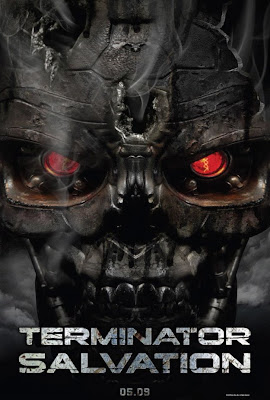
“Terminator Salvation” Trailer

The newest trailer for “Terminator Salvation” has recently been released. Are you excited yet? I love AI-themed films (The Wachowski brothers’ Matrix Trilogy, Stanley Kubrick’s 2001 Space Odyssey, Steven Spielberg’s “Artificial Intelligence,” James Cameron’s “The Terminator,” etc) and this one looks especially promising.  I hope it will make up for the disaster that was Terminator 3. See the trailer for “Terminator Salvation” here. Read about it here.

Posted in Trailers | 2 Comments

Film: “Tyson”

As children, my brother and I loved Mike Tyson, so much so, that we forced our mother to take us to every single electronic store to buy Mike Tyson’s Punch Out for Nintendo but couldn’t find it anywhere because it was sold out. Tyson was the youngest heavyweight champion ever but ruined his career by losing focus. In any case this documentary film is a treat for all Mike Tyson fans, or those who wish to revisit the 80s & 90s in 1.5 hours. See the trailer here. Comes out April 24.

Posted in Sports, Trailers | Comments Off on Film: “Tyson”

Momo

I was home in southern California for about 10 days for spring break. It was lovely being home for No Ruz and catching up with old friends and spending time with family. I also spent a lot of quality time with my dog, Momo. She’s a red-nosed pit bull and is the friendliest and most loving dog I’ve ever come across.

Posted in Orange County | Comments Off on Momo

Petraeus: Israel Might Attack Iran

The Huffington Post: Army General David Petraeus told Congress that “the Israeli government may ultimately see itself so threatened by the prospect of an Iranian nuclear weapon that it would take preemptive military action to derail or delay it.”

In an interview conducted shortly before he was sworn in today as prime minister of Israel, Benjamin Netanyahu laid down a challenge for Barack Obama. The American president, he said, must stop Iran from acquiring nuclear weapons–and quickly–or an imperiled Israel may be forced to attack Iran’s nuclear facilities itself.

[Of course, Iran does not pose any nuclear threat to Israel, even if Iran develops nuclear weapons. Iran does not pose a nuclear threat to Israel because the Jewish State is armed to the teeth with nuclear weapons.  Indeed, irrespective of Ahmadinejad’s statements, Iran has time and again shown itself to be pragmatic.  Israel, however, opposes Iran’s potential nuclear weapons program simply because it has been trying unsuccessfully to prevent the shift in the balance of power that has occured in recent years in Iran’s favor. While Israel enjoys having a nuclear deterrent, it wants to make sure Iran remains without one, thereby maintaining some leverage of the regime in Iran.]

Posted in Iran's Nuclear Program, The Conflict | 9 Comments

Stephen Colbert on Glenn Beck

This is delicious. See the video here. And can somebody please tell me why do people care about anything Chuck Norris has to say on politics? Please. Somebody. Anybody.

Posted in Humor | Comments Off on Stephen Colbert on Glenn Beck

Late Night Jokes Of The Week Part 5

The Huffington Post: I really really enjoy this compilations. See the latest one here.

Posted in Humor | 13 Comments

The iPouya Weblog Updates

There are some updates and changes related to the blog that I wanted to bring to your attention. First, the blog is approaching its four-year anniversary, so I wanted to recap a bit.

I started the blog first on blogger.com with the url ipouya.blogspot.com in April, 2005. Two years later I was encouraged by one of my friends to go “pro” and he helped me set it up in a more customized fashion with its own server and url. The blog has amassed nearly 120,000 hits and has an international viewership, especially in regions where English is common (see the cluster map above). On days when there is important breaking news related to material covered here, there’s a spike in viewership. For instance, viewership increased dramatically when the Israeli aggression occured in Gaza in Dec/Jan. Otherwise, the blog averages 75-100 hits per day.

When I first started the blog, I included a lot more commentary and I feel like the blog was more interesting then. Now, since I don’t have as much time, I usually just post articles and video clips.  Although I will continue to post articles from others (most people have more interesting things to say than me), I will go back to the “roots” of the blog and try to incorporate more commentary. I am also in the process of giving the blog a slight face lift so stay tuned. Anyway, thanx for making the blog what it is and I hope you will continue to journey with me in the exchange of ideas. I’ve said this before and I’ll say it again, I’ve learned a lot from the blog’s viewers and I am hopeful that this endeavor will continue to be mutually enriching.

Posted in iPouya | 6 Comments