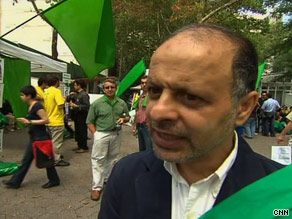
Iran: The 1st Chapter of the 21st Century?

I just read Professor Hamid Dabashi’s most recent Iran-piece on Al-Ahram Weekly. There was so much to quote from that I had a difficult time choosing which one. I’m going with the last paragraph, which is itself a quote he took from an Iranian blogger. I usually get a little sick to my stomach when I hear Iranians inflating their sense of self-importance but I rather enjoyed this excerpt: In the history books of the 21st century, the first chapter will be about us. In the introduction, they might write that important events have happened before us, events like 9/11 and war on Iraq and Afghanistan, but those were the remnants of the previous century, with an outdated language and with 20th century tools: airplanes, bombs and bullets. And then they will write that the first chapter is dedicated to us because we have been the true children of our time … They will write that we were the first social movement of which all of us were its leader and all of us were its organiser … They may make a subsection to describe how a movement without a command centre was acting so well- orchestrated. How its ideas, desires and slogans were suggested, criticised, and completed so well, and then one day they were expressed in such a harmony as if all these millions had practiced them together for years … In the same chapter they will write that we lived the last days of guns and bullets and we showed that where awareness, information and channels of communication for human connection exist, bullets are pointless. They may put a picture of a single bullet somewhere in our Freedom Museum and write for its caption “the last bullet that was ever pulled out of a magazine.


Posted in 22 Khordad, Iran | 4 Comments

Iran: Ahmadinejad Inaugurated & Challenges Ahead, The Rise of the IRGC, Sanctioning Iran, & more

1. The Christian Science Monitor: There’s a lot of good material being produced on Iran. The Christian Science Monitor, for example, has repeatedly posted excellent articles and analysis on Iran. Here’s their latest piece titled: “Why Iran’s Revolutionary Guards Mercilessly Crack Down.” Excerpt: “To Iran’s Revolutionary Guards, the danger facing the Islamic Republic is acute: Its founding ideals are under serious threat at home and from abroad, and every sacrifice must be made to preserve them as President Mahmoud Ahmadinejad embarks on his second term.”

2. Ahmadinejad Begins His 2nd Term as President: See the video here.

3. Challenges Ahead for Ahmadinejad: “Ahmadinejad’s position is increasingly challenging. According to the constitution he has to present his cabinet to the parliament two weeks after being sworn in. Yet only last week he caused a serious crisis just by mentioning his choice of vice-president, Esfandyar Rahim Mashaei. The supreme leader disagreed and 205 members of parliament wrote a letter questioning his wisdom. He then removed the man from that post only to put him back as his chief of staff – inviting yet another barrage of criticism.”

4. Sanctioning Iran: So I hear more and more Iranians, especially in the Diaspora, are calling for sanctions against Iran. Wow. What naivety. Please see Professor Cole’s analysis on why such a move is a disaster in the making. Excerpt: “Dabashi makes the excellent point that the sort of severe sanctions being dreamed up for Iran by the hawks in Congress resemble what was done to Iraq. Sanctions on Iraq just weakened civil society and cast down the country to fourth world status, killing some 500,000 innocent infants and toddlers, while signally failing to remove the regime. In fact, destroying civil society has the effect of bolstering the state, especially when it is an oil state.”

5. American Tourists Detained in Iran under Interrogation:  “Iranian authorities have begun questioning three Americans detained after allegedly illegally entering the country, state television has reported. ‘They are definitely Americans. They were detained four days ago. We don’t know whether they are tourists or not,’ Iraj Hassanzadeh, the deputy governor of Kordistan province, said.”

Posted in 22 Khordad, Iran | 4 Comments

Iran: Leader Endorses Ahmadinejad, Opponents Snub Ceremony, & more

1. Iran leader endorses Ahmadinejad: “Ayatollah Ali Khamenei, Iran’s supreme leader, has officially endorsed Mahmoud Ahmadinejad as the winner of the country’s June presidential election. Monday’s endorsement of Ahmadinejad’s victory comes ahead of his swearing-in before parliament for his second term on Wednesday, despite the president suffering a string of setbacks amid an apparent rift with his own conservative camp. ‘The official ceremony was held and supreme leader approved Mr Ahmadinejad’s presidency,’ the Arabic language al-Alam state television said.”

2. Shall he kiss his hand or shoulder… that is the question: See the awkward Ahmadinejad-Khamenei moment here.

3. Ahmadinejad’s Opponents Snub Election Ceremony: “News reports said that several leading opponents of Mr. Ahmadinejad stayed away from the ceremony Monday, including the main opposition candidate, Mir Hussein Mousavi, his ally Mehdi Karroubi and Hasan Khomeini, a reformist and the grandson of the Islamic Republic’s founder, Ayatollah Ruhollah Khomeini. Opposition leaders have hinted that they will stay away from the inauguration later in the week. Two former presidents who have criticized the election, Akbar Hashemi Rafsanjani and Mohammad Khatami, also boycotted Monday’s event, news reports said.”

4. Fighting for Influence in Iran’s Bazaars: “But, while Ahmadinejad had his tax run-in with the bazaar, Mousavi does not have a positive record with many bazaaris either. Older bazaaris can still remember Mousavi the firebrand leftist, who, as Prime Minister during most of the 1980s, was associated with price controls and food cooperatives during the Iran-Iraq War. But younger managers and workers generally express support for Mousavi, even though, as one pointed out, ‘Mousavi never visited the bazaar before the election.; Bazaaris felt slighted by the snub, and since its merchants are still a main conduit to Iran’s smaller towns and rural areas, this was undoubtedly communicated outside of the bazaar as well.”
5. Three American tourists held in Iran: “‘Reporting from Baghdad — Three Americans who apparently strayed across the Iranian border while on a hiking trip in the northern Iraqi region of Kurdistan are in Iranian custody, that country’s state-run television reported Saturday. The Arabic-language Al Alam station quoted an Interior Ministry official as saying the Americans, two men and a woman, were detained after they ignored warnings from border guards and crossed into Iran in a remote mountainous area about 55 miles northeast of the Kurdish town of Sulaymaniya.”

Posted in 22 Khordad, Iran, Palestine, The Conflict | 10 Comments

Iran: Group Threatens Ahmadinejad, His Aug. 5th Inauguration, Neda’s 40th, Iraqi Raid on the MKO, & more

1. What will happen on August 5th: “With Mr Ahmadinejad due to be sworn in for a second term on 5 August, the government has a tough choice. If it makes concessions in the face of continuing demonstrations, that would be a humiliating climb down. If, as seems more likely, it clings to power, it will do so as a wounded regime whose credibility is ebbing away.”

2. Threatening Ahmadinejad Over His Appointments and and Forced Resignations: “The Islamic Society of Engineers, a political group close to parliamentary speaker Ali Larijani, warned in an open letter to Ahmadinejad that he could suffer the same fate as Prime Minister Mohammed Mossadegh, who was deposed in 1953 in a CIA-backed coup with the acquiescence of the clergy. The letter also cites the experience of President Abolhassan Bani-Sadr, who was ousted in 1981 and fled the country after he fell out with the Islamic Republic’s founder, Ayatollah Ruhollah Khomeini. Both leaders had been elected by huge margins. ‘It seems you want to be the sole speaker and do not want to hear other voices,’ the group’s letter says, noting that recent actions by Ahmadinejad have frustrated his own supporters. ‘Therefore it is our duty to convey to you the voice of the people.'”

3. The 40 Day of Mourning for Neda’s Death is Approaching: “In response to the permit denial, Mousavi’s supporters began circulating routes for unauthorized marches and candlelight vigils to mark the religiously significant 40th day after the deaths of those killed at June 20 demonstrations, including Neda Agha-Soltan, whose slaying, captured on videotape, drew worldwide condemnation.”
4. Ahmadinejad’s Last Row: “Ahmadinejad had initially appointed Rahim-Masha’i as the first vice president, a post he resigned from after the Leader of the Islamic Revolution, Ayatollah Seyyed Ali Khamenei, sent a handwritten note to the office of the president on the issue. However, Rahim-Masha’i was later named the head of the presidential office, sparking a fresh row between Ahmadinejad and his supporters and opponents.”

5. 140 Detainees Freed: “Iran today responded to growing criticism over political detainees by freeing 140 inmates incarcerated in its most notorious jail following the recent post-election upheavals. The prisoners were released from Tehran’s Evin prison after MPs inspected the facility, where hundreds of opposition politicians, activists and protesters have been held following protests over President Mahmoud Ahmadinejad’s bitterly disputed re-election. The move followed the closure of another detention centre where human rights groups say torture led to several deaths. Iran’s supreme leader, Ayatollah Ali Khamenei, ordered the closure of Kahrizak prison on Tehran’s southern outskirts because it ‘lacked the standards’ to maintain detainees’ rights, officials said. Ayatollah Mahmoud Hashemi Shahroudi, urged officials to free inmates not suspected of serious offences. Some 150 political prisoners remain inside, according to official figures, including prominent supporters of the reformist candidate, Mir Hossein Mousavi, who claims last month’s presidential election was stolen from him.”

6. Iraqi Forces Raid Mujahideen Base: “A raid by Iraqi troops on a camp housing members of an exiled Iranian opposition group has left four people dead and more than 400 wounded. The Iraqi army had stormed Camp Ashraf to the north of Baghdad on Tuesday, but were forced to call in riot police to quell the violence when residents tried to resist. Iraq’s defence ministry said the offensive against the People’s Mujahedeen base was justified under a security agreement signed by Baghdad and Washington in November. ‘It’s our territory and it’s our right to enter, to impose Iraqi law on everybody,’  General Mohammed Askari, the defence ministry spokesman told Al-Arabiya television.”

7. Professor Juan Cole on the anti-MKO Raid: “Now that US troops have ceased their independent patrols in Iraqi cities, the government of Prime Minister Nuri al-Maliki has decided to move against the group. The Ministry of the Interior security forces are alleged to have been deeply infiltrated by the Badr Corps of the Islamic Supreme Council of Iraq, a leading party in parliament and ally of al-Maliki that was formed in Iran by Iraqi expatriates under the auspices of Ayatollah Khomeini. Badr in turn was from the 1980s through 2003 essentially a unit of the Iranian Revolutionary Guards Corps. Likely the victory of the hard liners and the IRGC in Iran’s struggle over the outcome of the June 12 presidential election has put them in a strong position to ask their Iraqi counterparts and former colleagues to move against the MEK.”
8. Ahmadinejad and Khamenei Continue Their Differences: “

9. Time Magazine’s Photo Essay on Iran, before and after the elections: See it here.

10. Tweets, Lies, and Videotape: Click here to read how a blogger deciphers fact from fiction.

Posted in 22 Khordad, Iran | 8 Comments

Iran: Global Protests, Vice President Sacked, Team Googoosh and Ganji, & more

1. Global protests over Iranian crackdown: “Protesters in dozens of cities worldwide on Saturday demanded the release of hundreds of detainees in Iran who were arrested in the bloody aftermath of the Islamic republic’s disputed presidential election. Saturday’s global day of action across about 100 cities in six continents was organized by United For Iran and supported by several human rights groups, including Human Rights Watch, Amnesty International and Reporters Without Borders. In London, England, protesters waved green flags and wore green wristbands — the color is symbolic of the opposition movement in Iran. The British protesters outside the Iranian Embassy in London wanted to show solidarity for those Iranians ‘who feel too intimidated, too fearful’ to go back out on the streets to protest, reported CNN Correspondent Paula Newton.”

2. Iran vice-president ‘sacked’: “Mahmoud Ahmadinejad, the Iranian president, has bowed to pressure and dismissed Esfandiar Rahim Mashaie, his choice for the key post of first vice president, Iranian media has reported. The decision on Friday came after Ayatollah Ali Khamenei, Iran’s supreme leader, ordered Ahmadinejad to reverse his decision regarding Mashaie who had been under fire for comments he made last year in which he was quoted as saying Iranians could be friends with anyone, including Israelis.” [You know these are troubling times when Khamenei is intervening in politics as much as he has been doing lately.]

3. Googoosh and Akbar Ganji make common cause: Read the story here. Watch the video here.
4. Iran accused of ‘Zionist’ tactics: “A letter to Intelligence Minister Gholamhossein Mohseni-Ejei posted on Mr Karroubi’s website says that “women were attacked with clubs and beaten and thrown in the gutters” during the protests. ‘This is more painful in comparison to crimes committed by the Zionists against the oppressed people of Palestine… The Zionist aggressors have some reservations when it comes to confronting women.'”

5. Closing Ranks Behind Ahmadinejad: “High-ranking clerics from both sides of Iran’s political spectrum stepped up sharp warnings against each other’s camps, while hard-liners continued to simmer over the appointment of a controversial aide to the inner circle of President Mahmoud Ahmadinejad. But a majority of the Assembly of Experts, a powerful committee that oversees the office of Iran’s supreme leader, Ayatollah Ali Khamenei, issued a statement today declaring support for him and Ahmadinejad’s presidency, a blow for moderate cleric Ayatollah Ali Akbar Hashemi Rafsanjani, who is a supporter of the opposition camp and hoped to rally clerical support against hard-liners.”
6. Russian Planes Kill: “A passenger plane burst into flames and skidded off the runway as it was landing in a northeastern city, killing 17 people, said the state news agency. Footage from PressTV showed the front end of the plane had been sheared off, leaving mangled wreckage where the cockpit had once been. The Russian-made Ilyushin plane from the privately owned Aria Airlines was carrying 153 passengers and flew from the capital Tehran to the northeastern city of Mashhad, 600 miles (1,000km) away. On 15 July, another Iranian passenger plane crashed soon after take off, killing 168 people on board.”

Posted in 22 Khordad, Iran | 3 Comments

Iran: Rafsanjani speaks indirectly in defiance of Khamenei & more

1. In Friday sermon, Rafsanjani criticizes Iran’s crackdown: Tens of thousands of Iranians attended Friday prayers at Tehran University and the audience roared with shouts of “freedom!” as leading cleric Ali Akbar Hashemi Rafsanjani obliquely criticized the government for its crackdown on protesters. Outside, a small group of pro-democracy protesters were beaten by police and the Basiji militia that have come to act as the primary muscle on Tehran’s streets for Supreme Leader Ayatollah Ali Khamenei and his ally, President Mahmoud Ahmadinejad – who many Iranians believe unfairly won last month’s presidential election. The Associated Press reported that 15 protesters were arrested.

2. Rafsanjani Defies Khamenei at Friday Sermon: “By calling for an open debate about the election result, Mr Rafsanjani was almost openly challenging the supreme leader, Ayatollah Ali Khamenei. Four weeks ago, from the same pulpit, Mr Khamenei called for an end to discussion about an election result which he declared had been blessed by God. Former President Rafsanjani played his trump card, by referring to his friendship with the founder of the Islamic Republic, Ayatollah Khomeini. He quoted Ayatollah Khomeini in ways that appeared to support the opposition’s right to demonstrate. Mr Rafsanjani even called for protesters who have been arrested to be released from prison.”
3. Rafsanjani: Iran in crisis: Alireza Ronaghi, Al Jazeera’s correspondent in Tehran, said: “Rafsanjani said we must preserve the Islamic nature of our government and without the people’s votes and trust, the government cannot be Islamic. “And that’s the argument that Mir Hossein Mousavi and Mehdi Karroubi [another defeated presidential candidate] have been putting forth.

4. Professor Juan Cole on Rafsanjani’s Sermon: “Ghanbar Naderi points out that Rafsanjani has a long history of flip-flopping between the hard line and reformist camps. I would argue that this is because he is a pragmatic conservative, and his sermon today shows that he has concluded that shoe-horning Ahmadinejad into a second term by stealing the election is above all just not a practical course of action even for conservatives. He is playing a role similar to that of prominent American conservatives who defected to Obama in fall of 2008, because they just did not believe McCain-Palin were a practical alternative. Precisely because Rafsanjani is not a hard-edged ideologue, his clear ambivalence about the regime’s actions is all the more striking as an indication of the shaky situation in Iran.”

5. Aljazeera English’s video report on Rafsanjani’s sermon: See the video here.

6. Footage from the protest and clashes outside Friday prayers: See the video here.

7. More on the Internal Power Struggle: Khamenei and the IRGC vs Rafsanjani: “June 12th was a coup d’état by Iran’s Islamic Revolutionary Guard Corps (IRGC) against Hashemi Rafsanjani and his family oligarchy. The Iranian economy has been the private turf of a handful of economic and political mafias since the revolution. Hashemi Rafsanjani and his extended family were among the first groups benefiting from Iran’s crony capitalism. Using his political influence as President of Iran, and Speaker of the Parliament, Rafsanjani created a vast family dynasty. Initiating the liberalization of the economy after the war with Iraq, Rafsanjani ushered an ambitious privatization program, allowing members of his family, and other insiders, to take possession of state property at far bellow market prices. The family made a fortune when Rafsanjani opened the oil industry to private Iranian contractors. By the end of the 1990s, the economic power of the family was unparalleled in Iran’s private sector. In recent years, however, the family dynasty has been facing fierce competition, particularly from IRGC. Since the 1990s, IRGC slowly transformed itself from a sheer military force, to a complex military, political, and economic oligarchy in control of main arteries of the Iranian economy. It is now a large holding company with multi-billion dollar, legal and illegal, contracts in oil, water, electricity, transport, foreign trade, and other economic sectors.”

Posted in 22 Khordad, Iran | 12 Comments

Iran: Rafsanjani to give Friday sermon, Ahmadinejad to speak in Cairo, & more

1. Rafsanjani to give Friday sermon, Mousavi and Khatami to attend: “The semiofficial Iranian Labor News Agency reported Sunday that Ayatollah Ali Akbar Hashemi Rafsanjani will deliver the nation’s weekly keynote religious sermon. Rafsanjani, who chairs powerful boards that oversee the office of the supreme leader and adjudicate disputes between government bodies, is the highest-profile backer of opposition candidate Mir-Hossein Mousavi, who lost to Ahmadinejad in an election marred by allegations of vote-rigging. Mousavi’s Facebook page said that he and his ally, former President Mohammad Khatami, would attend the prayer sermon. The Facebook page invited supporters who poured into the streets in recent weeks to attend, though Mousavi’s website, Ghalamnews.ir, carried no such announcement. News of the return of reformists and moderates to the official Friday prayer ceremony could serve as a challenge to hard-liners, led by supreme leader Ali Khamenei, on their home turf. Alternately, it could be a sign that the two sides have brokered a truce in their continuing political conflict. The election and subsequent demonstrations, attended by hundreds of thousands of Iranians, have led to numerous deaths and arrests.”

2. Has Ahmadinejad lost his global following?: “For 30 years, Iran has cast itself as a leader of resistance to Israeli and Western policies, and few of its leaders have done as much for that image as President Mahmoud Ahmadinejad. Under Mr. Ahmadinejad, Iran’s ‘resistance’ brand has gone global, challenging Western hegemony in the name of defending the globally downtrodden and winning allies from Lebanon to Venezuela while drawing harsh criticism from the United States. But analysts say Iran’s resistance image has been challenged by Ahmadinejad’s controversial June 12 reelection, after which hundreds of thousands of Iranians took to the street to protest what they say is a fradulent vote. Even so, the idea of ‘resistance’ is hard-wired into the Islamic Republic, and many expect the president to strongly reassert it by turning up verbal attacks on Israel and the West.”

3. Israeli Warships Send Signal to Iran: “Two Israeli warships have sailed through the Suez Canal between the Mediterranean and the Red Sea, Israeli and Egyptian officials say. Israeli media described the passage of the two Saar class missile boats as a ‘message’ to Iran.”

4. Defeated Conservative Warns of Iran Disintegration: “The defeated conservative candidate in Iran‘s disputed presidential election warned the government and opposition protesters that more postelection turmoil could lead to the country’s disintegration. In remarks published on his Web site late Sunday, Mohsen Rezaei urged the other two defeated candidates — both of them reformists — to drop their push for a new vote and work with President Mahmoud Ahmadinejad. The former commander of the powerful Revolutionary Guard may be trying to position himself as a neutral figure in the dispute who could work to bring Iran’s divided camps together.”

5. “Bush Deserves More Credit on Iran”??? It’s almost as if this former Cheney adviser is taking credit for the demonstrations in Iran. Read the article here.
6. Israelis Speak about Iranians… “Fuck ’em”: See the video here.

Posted in 22 Khordad, Iran | 5 Comments

Iran: Soldiers ready to die, Velayat-e Faqi, 18 Tir – History Repeats, Death in the Dorms, & more

1. Talking as if Iran is approaching a civil war: “Gen. Sayyed Hassan Firouzabadi, chief of Iran’s Joint Armed Forces, said Iranian soldiers were willing to die as they did in the brutal eight-year Iran-Iraq war in the 1980s, according to the state-run Fars News Agency. ‘Some may think that by protesting and chanting their slogans against us, we will back down, retreat and give up,” Firouzabadi said. “We are ready to sacrifice our lives, as we showed during the time of the Sacred Defense [the Iran-Iraq war].'”

2. The Issue of the Velayat-e Faqi Comes to the Forefront: The debate over velayat-e faqih has reemerged as the central issue in Iran. Today, even as the Revolutionary Guard–the Praetorian Guard founded by Ayatollah Khomeini in 1979 to defend the clerical regime–is asserting its control over the streets of Tehran, Supreme Leader Ayatollah Ali Khamanei’s impatience in handling the election may ultimately cost the regime its legitimacy. A central figure in the debate over velayat-e faqih will be the leading protégé of Ayatollah Khoi, Ayatollah Ali Sistani, the Iranian cleric who is demonstrating the principals of his mentor in his patient oversight of civil society and the emerging democracy in Iraq. For Iranians in the streets, as well as clerics in the holy city of Qom, Sistani is among the most revered religious figures, and a cleric of greater authority and stature than Ali Khamenei himself. The irony is that none of the leading actors in the Iranian drama, Mousavi, Karroubi, Rafsanjani, Larijani or Khatami have identified themselves with Sistani or opposition to the existing order of clerical dominion over civil society. They are each products of the existing system. And yet the principle of velayat-e faqih is what is at stake and will emerge as the issue at hand.

3. History Repeats: Iran Uprising’s 10th Anniversary: See the al-Jazeera video here.

4. Ahmadinejad trying to deflect attention away from Iran: “This heartfelt incident of el-Sherbini’s martyrdom is a clear evidence of corruption in German judiciary system and a disgrace to the United Nations,’ Iran’s President Mahmoud Ahmadinejad said on Sunday. He slammed the violation of human rights in Germany, saying, ‘The attitude of Germany and most of Western countries to her killing is similar to their stance on the massacre of innocent Palestinians in the Gaza Strip.’

5. Protests blocking Iran’s regional and international efforts: “The consequences of the protests will be felt for months or even years to come, and are likely to put a temporary cap on Iran’s regional reach, while limiting dialogue with the US… With Iran so focused on affairs at home, it is unlikely that there will be any significant changes soon to foreign policy – whether a new nuclear policy or responding to Obama’s overtures – apart from blaming the US and the West for all the violence.”

6. Iason Athanasiadis, a foreign journalist and an acquaintance of mine from Harvard speaks to al-Jazeera English about his detainment in Iran: See the very interesting video here.

7. Death in the Dorms: Iranian Students Recall Horror of Police Invasion: “Under Iranian law, police, revolutionary guards and other militia are not allowed to enter universities – a legacy of the 1999 student riots. Until last month those riots were the most serious unrest the country had seen since the Islamic revolution. But with the country convulsed by protests at the 12 June elections, there was no holding back that Sunday night. ‘The police threw teargas into the dorms, beat us, broke the windows and forced us to lie on the ground,’ one student recalled. ‘I had not even been protesting but one of them jumped on me, sat on my back and beat me. And then, while pretending to search me for guns or knives, he abused me sexually. They were threatening to hang us and rape us.'”

8. Joan Baez sings in Santa Monica on July 9th in solidarity with Iranian protesters: See the video here.

Posted in 22 Khordad, Iran | 1 Comment

Iran: 18 Tir, Footage, Seeking Foreign Approval, Iran’s Slide to Military Rule, & more

1. 18 Tir Demonstrations: “Iranian pro-government Basij militia members dispersed crowds of protesters here Thursday — sometimes with force — witnesses said. An estimated 2,000 to 3,000 people crowded the streets in different locations of the city, and headed toward Tehran University, the site of a student uprising in 1999. Several protesters were hit on the arms and backs by the Basij, pro-government militia members, while elsewhere riot police released tear gas into crowds.”

2. Footage of the Protests: See the video here.

3. “People and Power” and iPouya on Seeking Foreign Approval: See the documentary “People and Power” here. The documentary is actually not very good but it includes some remarkable footage. One part I found annoying was when the interviewer speaks to two young Iranian men and one of them says that he is frustrated by the West’s perception of Iran and that “Iran is not Afghanistan, Pakistan, or Iraq.” What does that mean? Well, Iran is also not China, the US, France, and Mars either. And you know what else? The US is not Russia, Mexico, Canada, or Venus. I’m poking fun but in reality, I felt like he was saying that “the West” should not mix Iranians with “those people” implying that Iranians are better. And I don’t think I’m reading into it… I’ve heard similar but more blatant statements from Iranians time and again. And why is it that so many Iranians are always trying to explain themselves to foreigners? It seems as though so many are always looking for foreign approval. Ugh. If they were interviewing me and asked me “What message do you have for the West?” I’d say: “We don’t need your approval for anything. Leave us, our land, and our region alone. Fascism, anti-Semitism and the Holocaust, and WWI and WWII originated in Europe. You have mastered the art of mass murder, yet we have to explain ourselves to you?” And then I’d conclude by paying a tribute to Michael Jackson by doing the moonwalk, haha.
4. Iran’s Slide to Military Rule: “…That is the culmination of a trend that began as long ago as 1989, when Ayatollah Khamenei succeeded Ayatollah Khomeini, the founder of the Islamic Republic. Lacking the religious credentials, or the charisma, of his predecessor, Mr Khamenei built up a power base in the Revolutionary Guards. Since Iran’s President Mahmoud Ahmadinejad was first elected four years ago, commentators have seen an acceleration of that trend, with the guards now assigned multi-billion dollar contracts to help secure their loyalty. As much as two years ago, some western diplomats were talking about a slow and silent military coup taking place. The power of the clergy has been steadily diminished.”

5. From the TehranBureau – “A loud voice cannot compete with a clear one”: “Iran has experienced two revolutions in the course of less than a century. The Islamic Revolution of 1979 was preceded by the Constitutional Revolution of 1906, which led to the establishment of a parliament. Will the events of recent days lead yet to another? I certainly do not think so. I think — and hope — that we have learned our lesson. Nowhere else in our recent history have we had so many questions, such a non-violent thirst for figuring things out. Today there is the chance, no matter how confined or restricted, to look back at a century of struggle for independence and freedom. To decipher the weaknesses, the strengths and  explore the demons that led us to our present state of being. The period of relative silence leading up to 18 Tir is perhaps proof that we live in a world where we all crave stability more than chaos, calm more than resistance or revenge. But more than that, I think this also goes to show what we have learned the hard way: A loud voice cannot compete with a clear one, even if it’s just a whisper. This — this bouncing of thoughts and ideas, this constant production of words and stories and our constant struggle — may perhaps have taught us that power lies not only in the images of burnt flags and broken windows. It will be our words, thoughts and ideas that will prove, in the long run, the most powerful.”

6. Protests Made Up of the Middle Class? Professor Dabashi Differs: Read the whole article here. Excerpt: “Of a total Iranian population of 72 million, upward of 70 per cent are under the age of 30. While the total rate of unemployment under Ahmadinejad, predicated on correspondingly high numbers under Khatami’s two-term presidency, is 30 per cent, this rate, according to Djavad Salehi-Isfahani, the most reliable Iranian economist around, for young people between the ages of 15 and 29 (some 35 per cent of the total population) is 70 per cent. So seven out of every 10 people in this age group can scarce find a job, let alone marry, let alone have children and form a family. In exactly what phantasmagoria definition of ‘the middle class’ can they hope to be included? Let me cite other statistics. You must have noticed the overwhelming presence of women in these demonstrations. Right? Now, 63 per cent of university entrants in Iran are women, but they make up only 12.3 per cent of the workforce. In other words, one out of every two women university graduates earn their degrees and then go back to live with their parents, remain a burden on their limited budget, and can only hope to leave their parents’ home if they find a husband among those three out of 10 young men who may be lucky enough to find a job that would enable them to marry. In what Marxist, Keynesian, or neoliberal definition of this blessed ‘middle class’ would they fit?”

Posted in 22 Khordad, Iran | 5 Comments

Iran: Mousavi’s Next Step, the Plight of Journalists, Obama on Biden’s Iran Comment, Mojtaba Khamenei, & more

Mousavi’s Potential Next Step: “Mousavi hinted on Monday that he may move away from the tactic of protests and create a political party to work in what he called ‘a legal framework.’ Late Monday, he met with the other top stars of the reform movement — former president Mohammad Khatami and Mahdi Karroubi, another election candidate — in a show of unity. The three warned Iran’s clerical leadership that if the security crackdown continues, it ‘will only lead to radicalization of political activities,’ Mousavi’s Web site reported on Tuesday.”

Iran is world’s top jailer of journalists: “With at least 30 journalists currently in prison, Iran replaces China as the world’s worst jailer of journalists, the Committee to Protect Journalists said today. CPJ called on the Iranian authorities to release all journalists who have been detained following the country’s disputed June 12 presidential elections.”

Obama Clarifies Biden’s Iran Comment: “Obama was asked on CNN this morning, ‘Are you giving Israel a green light?’ ‘Absolutely not,’ the president replied. ‘And I think it’s very important that I’m as clear as I can be, and our administration is as consistent as we can be on this issue.’ ‘I think Vice President Biden stated a categorical fact which is we can’t dictate to other countries what their security interests are,’ Obama added. ‘What is also true is that it is the policy of the United States to try to resolve the issue of Iran’s nuclear capabilities in a peaceful way through diplomatic channels. That is our policy, I have been talking about this for the last two years, we are going to continue to pursue this, and you know we have said directly to the Israelis that it is important to try and solve this in an international setting in a way that does not create major conflict in the Middle East.”

Khamenei’s Son Mojtaba, His Control Over the Basij, & the Internal Power Struggle: “The son of Iran’s supreme leader, Ayatollah Ali Khamenei, has taken control of the militia being used to crush the protest movement, according to a senior Iranian source. The source, a politician with strong connections to the security apparatus, said that the leading role being played by Mojtaba Khamenei had dismayed many of the country’s senior clerics, conservative politicians and Revolutionary Guard generals.”

‘500 protestors to stand trial in Iran’: “Iran’s Prosecutor General says some 500 individuals arrested in the course of the post-vote unrest will be subject to court action.”

Iran opposition urges release of detainees: “During the meeting, they said that the ‘wave of arrests’ in the country must be brought to an immediate end, calling for the release of those kept in custody without being found guilty. The three opposition figures also called for an end to what they described as the ‘ultra security situation’ in the country, warning that the very continuation of such conditions could result in and benefit extreme political acts.”

Posted in 22 Khordad, Iran | 3 Comments

Iran: Sa’adi, Clerical Factionalism, U2, Public Confessions? & more

1. Exploiting Iranian Poet Sa’adi: I’m not gonna lie, it sort of annoys me to see so many Iranians using Sa’adi’s humanistic poem to get non-Iranians to care about Iran, but they themselves fail to recognize the poem’s meaning and disregard the rest of the world. Do these same Iranians who are posting this poem all over the net care about human suffering elsewhere, like in Iraq, Afghanistan, or Palestine or do they not matter because they are not Iranian?
2. Mousavi Details Alleged Fraud: In a 24-page document posted on his Web site, Mousavi’s special committee studying election fraud accused influential Ahmadinejad supporters of handing out cash bonuses and food, increasing wages, printing millions of extra ballots and other acts in the run-up to the vote.

3. Iran clerics defy election ruling: A group of clerics in Iran has called Iran’s presidential vote invalid, contradicting official results. The pro-reform group’s statement pits it against the top legislative body, which last week formally endorsed the re-election of Mahmoud Ahmadinejad. On Saturday, former President Akbar Hashemi Rafsanjani said that post-election events had caused bitterness.

4. Top Reformers Admitted Plot, Iran Declares:  Iranian leaders say they have obtained confessions from top reformist officials that they plotted to bring down the government with a “velvet” revolution. Such confessions, almost always extracted under duress, are part of an effort to recast the civil unrest set off by Iran’s disputed presidential election as a conspiracy orchestrated by foreign nations, human rights groups say.The government has made it a practice to publize confessions from political prisoners held without charge or legal representation, often subjected to pressure tactics like sleep deprivation, solitary confinement and torture, according to human rights groups and former political prisoners. Human rights groups estimate that hundreds of people have been detained.

5. Fears grow for Iranian detainees: First the mass protests were suppressed by force, then came the mass arrests. Three weeks after Iran’s disputed presidential election, scores – possibly hundreds – of opposition supporters and prominent reformists remain in prison. Their families have had little or no information about their fate. Most are too worried to speak to the press now. They describe a climate of terror in Tehran.

6. Iranian hardliner calls opposition leader US agent: A top aide of Iran’s supreme leader called the country’s main opposition figure a U.S. agent and accused him of committing crimes against the nation in an editorial Saturday. The editorial represents the first time that Mir Hossein Mousavi, who ran for president in Iran’s June 12 elections, has been publicly called a U.S. agent. “It has to be asked whether the actions of (Mousavi and his supporters) are in response to instructions by American authorities,” said Hossein Shariatmadari in an editorial appearing in the conservative daily Kayhan. Shariatmadari, who holds no official position but is a close adviser to Iran’s supreme leader Ayatollah Ali Khamenei, added that Mousavi was trying to “escape punishment for murdering innocent people, holding riots, cooperating with foreigners and acting as America’s fifth column inside the country.”

7. U2 Goes Green: See the concert video here.

Posted in 22 Khordad, Iran | 5 Comments

Iran: Pressure Mounts to Arrest Mousavi, SMS Texting Unblocked, Kadivar, Iran Easier to Bomb? & more

1. Iran ‘lifts block on SMS texting’: Reports from Iran say that SMS text messaging services have been unblocked for the first time since disputed presidential elections. However, Iranian news agencies say there are still technical problems. Text messaging and social networks were widely used by protesters in mass rallies following the election. 

2. Hardline Pressure Mounts to Arrest Mousavi: “A group of hardline Iranian members of parliament want the judiciary to prosecute defeated presidential candidate Mirhossein Mousavi over post-election unrest that rocked the Islamic Republic last month. “Those who hold illegal rallies and gatherings should be legally pursued,” MP Mohammad Taghi Rahbar was quoted as saying by the hardline Javan newspaper on Thursday. It said Rahbar was among several MPs preparing to write to the judiciary complaining about Mousavi’s activities after the disputed June 12 election. It did not say how many lawmakers backed the petition. In another sign of mounting hardline pressure, state television said a student branch of the pro-government Basij militia, which helped police suppress pro-Mousavi street protests, had urged the attorney-general to take him to court.”

3. Iran Now Harder To Bomb: “This is not a minor issue for Israel, nor for American military planners who might have harbored hopes of reviving the idea of a preemptive strike on Iranian nuclear sites. A former head of Israel’s Mossad intelligence service, Meir Dagan, let slip the dilemma facing anti-Iranian hawks when he told journalists recently: ‘If the reformist candidate Mousavi had won, Israel would have had a more serious problem because it would need to explain to the world the danger of the Iranian threat, since Mousavi is perceived internationally arena as a moderate element.’ In effect, Dagan said, Ahmadinijad was Israel’s choice because it would have been a lot easier to send a wave or two of F-15s to bomb Iran if the world knew that Iranians had, indeed, overwhelmingly reelected such a cretin. Now, images of street protests vastly complicate that calculus. Imagine the revulsion if such air strikes, as they regularly do in Afghanistan, led to the unintended deaths of dozens or more of the very Iranians who are being cheered in the streets today?” [I think you can also make the argument that it is now easier to bomb Iran. The disputed election results and the post-election crackdown has seriously discredited the regime in the eyes of the international community, so much so that an Israeli attack on its nuclear facility will not be condemned the way it would have been if Israel attacked before the post-election fall out.]

4. Ayatollah Mohsen Kadivar on Post-Election Iran: “This Iranian form of theocracy has failed. The rights of the Iranian peoples are trampled upon and my homeland is heading towards a military dictatorship. President Mahmoud Ahmadinejad behaves like an Iranian Taliban. The supreme leader, Mr. Ali Khamenei, has tied his fate to that of Ahmadinejad, a great moral, but also political mistake.”  

“When he [Khamenei], together with Ahmadinejad, speaks about foreign countries being behind the protests in Iran, he very much reminds me of the king (the Shah). He used the same arguments and could not recognize that he was witnessing a national and democratic protest movement of his own people. Towards the end, the shah only thought of holding up his regime. Today, Mr. Khamenei does not think any differently.”

5. Selling Iran: Ahmadinejad, Privatization and a Bus Driver Who Said No: Since his election in 2005, Mahmoud Ahmadinejad, under the guidance of the Supreme Leader of Iran, Ali Khamenei, has overseen a regime dedicated to the privatization of state-controlled industries. The intention of the regime, as stated by the newly appointed Governor of the Bank of the Islamic Republic of Iran, Seyyed Shams Al-din Hosseini, is to privatize 80% of state-owned industries by 2010. This mandate was made real just prior to the disputed elections as a state-owned bank, Saderat, announced it would offer 6% of its shares to private investors (Press TV, 6/8/09). Other significant privatizations during Ahmadinejad’s reign include the postal service, two other state-run banks, Tejerat and Mellat, and, in February 2008, a 5% bloc of shares in the publicly owned steel maker, Foulad-e Mobarakeh, was sold out in eight minutes (Iran Daily, 2/14/08). In total, since 2005, 247 enterprises have been processed by the Iran Privatization Organization, the state-ministry specifically charged with overseeing privatizations (Iranian Privatization Organization website).

Posted in 22 Khordad, Iran | 4 Comments

Iran: Mousavi’s Latest Statement, Clinton, Hactivism, US Dollars, Mesbah Yazdi as Faqi? & more

1. Mousavi’s Latest Statement: Mir Hussein Mousavi issued a statement today in response to Guardian Council certifying the election results. Mousavi said the majority of the people including him do not recognize the legitimacy of the current government. He expressed his fears about a grave danger facing the country because people no longer trust the government. According to Mousavi, it is not too late to regain people’s trust and reinstate the rule of the law. Denying the fact that people have lost their trust in the government is not beneficial, he said. He requested an end to the militarization of the society, revising the election laws, honoring the article 27 of the constitution (freedom of assembly), freedom of media, reactivating news websites, and a ban of illegal government intervention in restricting communication and monitoring people’s activities among other things.

2. Khatami Weighs in: “In boldly worded statements posted on their Web sites, Khatami accused Iran’s leadership of a ‘velvet coup against the people and democracy,’ and Mousavi said the government’s crackdown on demonstrators was ‘tantamount to a coup.'”

3. My Friend in Iran on the Election Results: “My theory is that pro-Mousavi and anti-Ahmadinejad analysts are generalizing based on anecdotes from areas where Mousavi was indeed in the lead, including, most prominently, in the city of Tehran (Mousavi was 51% in central and south Tehran, and 62% in northern Tehran, according to official results), to conclude that the same must have been the case everywhere else, and since it didn’t pan out that way, the result must be a fake. Frankly, i find that unconvincing. It seems more a case of Tehranis and the intelligentsia refusing to accept that they’ve been upstaged by the provinces. And if indeed the provinces were won by Mousavi, how come we see nowhere near the intensity of the Tehran protests anywhere else in the country?”

4. Secretary of State: Hilary Clinton on Iran: Secretary of State Hillary Clinton refrained from comment Monday on the reelection of Iranian President Mahmoud Ahmadinejad, but pointed to a “credibility” gap for Iran’s leadership. “I’m not going to speculate on, you know, what happens with their internal regime,” the top US diplomat said. “Obviously, they have a huge credibility gap with their own people as to the election process, and I don’t think that’s going to disappear by any finding of a limited review of a relatively small number of ballots,” Clinton added.

5. Basij militia calls for Mousavi to be prosecuted over post-election unrest: Iran’s opposition leader Mir Hossein Mousavi today became the target of the notorious Basij militia as it called for him to be prosecuted for his role in the greatest political unrest in Iran since the Islamic revolution. In a letter to the country’s chief prosecutor, the Basij accuse Mousavi of involvement in nine offences against the state, including “disturbing the nation’s security”. That charge carries a maximum 10-year prison sentence.

6. ‘Hacktivists’ target Iran’s leadership online: A sharp clampdown by Iranian authorities may have quelled street protests, but the fight goes on in cyberspace. Groups of “hacktivists”- Web hackers demanding Internet freedom – say they are targeting Web pages of Iran’s leadership in response to the regime’s muzzling of blogs, news outlets and other sites. It’s not clear how much the wired warriors have disrupted official Iranian sites. Recent attempts by the Associated Press to access sites for state news organizations, including the Islamic Republic News Agency and Fars, were unsuccessful – with a message saying the links were “broken.”

7. Battle for Iran shifts from the streets to the heart of power: In a move with even greater potential significance, according to several reports Rafsanjani has been lobbying fellow members of the powerful 86-strong Assembly of Experts, which he chairs, to replace Khamenei as the supreme leader with a small committee of senior ayatollahs, of which Khamenei would be a member. If Rafsanjani were successful, the constitutional change would mean a profound shift in the balance of power within Iran’s theocratic regime. “Although Hashemi Rafsanjani is not a popular politician in Iran any more, he is the only hope that Iranians have … for the annulment of the election,” said an Iranian political analyst who asked not be named. “He is the only one who people think is able to stand against the supreme leader.” The membership of the Assembly of Experts, which has the power to appoint the supreme leader, is split between those supporting Rafsanjani and those who have gravitated around the highly influential ultra-hardline cleric Mohammad-Taqi Mesbah Yazdi, who is widely seen as both a supporter of Ahmadinejad and the president’s religious mentor. Yazdi is also believed to have his own ambitions to succeed Khamenei as supreme leader. Like Ahmadinejad, he is fiercely opposed to the push by reformists for more democratic representation in Iran.
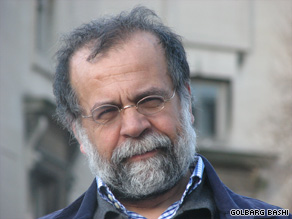
8. Professor Hamid Dabashi: U.S. dollars could kill Iran’s protest movement: Obama can help this budding seed of hope for civil liberties even more emphatically by altogether cutting the budget “to promote democracy in Iran,” evidently channeled through the U.S. Agency for International Development. Ken Dilanian of USA Today reports, “the Obama administration is moving forward with plans to fund groups that support Iranian dissidents.” This financial aid is not only a waste of taxpayer money under these severe economic circumstances, but is in fact the surest way to kill that inborn and grassroots movement. It mostly will be abused by expatriate and entirely discredited opposition groups ranging from the monarchist supporters of Reza Pahlavi to the members of the Mojahedin Khalq Organization, and it will in turn strengthen the hand of the regime to denounce the Green Movement as funded by Americans.

Posted in 22 Khordad, Iran | 13 Comments

Iran: Guardian Council Confirm Election Results, Rafsanjani Falls in Line, Sunday, UCI, & more

1. Guardian Council Confirms Ahmadinejad’s Victory: “The secretary of the Guardian Council in a letter to the interior minister announced the final decision of the Council… and declares the approval of the accuracy of the results of… the presidential election,” the state broadcaster said. A partial recount of the election carried out on Monday showed no irregularities in the vote, Iran’s English-language Press TV television station added, according to Reuters news agency.

2. Rafsanjani Falls in Line: Associated Press: For the first time since the election, former President Hashemi Rafsanjani spoke publicly about the unrest, claiming that “suspicious hands” were trying to open rifts between the people and the Islamic system. Professor Juan Cole: “Rafsanjani has clearly decided to defer to Supreme Leader Ali Khamenei on handling the outcome of the elections, and has come out as critical of the crowd politics and occasional turbulence they produced. As a multi-billionaire and man of the establishment, he may well have been frightened that the massive street rallies for Mousavi a week ago signalled a danger to the status quo, which he is attempting to preserve. From Rafsanjani’s point of view, Khamenei, Ahmadinejad and others have been making a slow-motion coup, reducing the sigificance and openness of the of the system by excluding the reformists from running for office. Wanting to go back to 1997 is not the same as wanting a revolution.”

3. Sunday, First Demonstration “in days”: “About 5,000 protesters marched slowly and silently through Tehran on Sunday near a mosque where the government was allowing a demonstration for the first time in days. Authorities were riding on motorcycles alongside the marchers, who are telling each other to walk slowly and drag their feet. Police were telling the demonstrators to move faster. Some of the protesters were telling the police that they have the legal right to protest in peace. The marchers are walking from north to south down a major street, Shariati Street, near the Ghoba Mosque, where a memorial is being held in honor of a hero of the 1979 Islamic Revolution. The gathering is officially meant to honor Mohammad Beheshti, who was killed in a bombing on this date 28 years ago. It follows two weeks of protests against the official results of the June 12 presidential elections, which President Mahmoud Ahmadinejad won.”

4. Sunday Demonstration Broken Up: “Witnesses said riot police used tear gas and clubs to break up a crowd of up to 3,000 protesters who had gathered near north Tehran’s Ghoba Mosque in the country’s first major post-election unrest in four days.”

5. Don’t Assume Ahmadinejad Really Lost: [Baer, a former CIA field agent with much field experience in the Middle East is usually a good source which is why I wanted to post this piece of his.] “For too many years now, the Western media have looked at Iran through the narrow prism of Iran’s liberal middle class — an intelligentsia that is addicted to the Internet and American music and is more ready to talk to the Western press, including people with money to buy tickets to Paris or Los Angeles. Reading Lolita in Tehran is a terrific book, but does it represent the real Iran? (See pictures of Iran’s presidential election and its turbulent aftermath.) Before we settle on the narrative that there has been a hard-line takeover in Iran, an illegitimate coup d’état, we need to seriously consider the possibility that there has been a popular hard-line takeover, an electoral mandate for Ahmadinejad and his policies.”

6. More Focus on the Revolutionary Guards: “Eight of the 21 posts in the president’s cabinet are held by former members, according to Ali Alfoneh, an analyst at Washington’s American Enterprise Institute. Among them are Interior Minister Sadeq Mahsouli, whose agency ran the election, and Defense Minister Mostafa Mohammad-Najjar. Another five places are occupied by past Basij commanders. The state broadcasting arm is headed by Ezzatollah Zarghami, a former guard. At least one-third of Iran’s parliament members are former guards, according to Nader. Under Ahmadinejad’s predecessor, Mohammad Khatami, 65, only three ministers had belonged to the guards or Basij.”

7. Bon Jovi and Andy in Solidarity with Protesters in Iran: “Stand by Me”

8. iPouya on the UCI Teach-in: I went to Saturday’s UCI teach-in and there was one thing during the open mic session near the end that I think specifically warrants address. An Iranian man went up and said that he was baffled at the fact that all those Americans who were honking in the streets of Irvine in solidarity with the street vigils and demonstrations on Irvine’s street corners failed to show up to the teach-in. He argued that all of the world’s population should be concerned about what’s happening in Iran and that, at the least, those people who expressed concern through their car horns should have attended the teach-in at UCI.  I don’t mean to generalize (actually I do), but this is such typical Iranian rubbish. They expect the world to care about what they care about, but refuse to participate in anything that doesn’t concern Iran. In other words, these same people are indifferent about human rights in Iraq, Palestine, Chechnya, China, you name it, but their egos tell them that the world should focus on Iran!  If they want non-Iranians to pay attention to Iran, then they must also form coalitions with other people struggling in the world.

Posted in 22 Khordad, Iran | 6 Comments

The King is Dead

Tribute to Michael Jackson: Arguably the most famous musician in world history died yesterday and like many, I was shocked and saddened to hear the news. When my brother and I were little, we didn’t have any cassette tapes (this is long before the era of CDs) but we had one tape, and that was of Michael Jackson’s “Thriller” and that’s all we needed. Here’s his greatest song and the most amazing music video ever made. And see this video here to see how international both Michael Jackson and Thriller continues to be.
Remember Michael and don’t forget about Iran.

Posted in Music | 10 Comments